



Disposing of an inherited holiday home or resort condo: options when no buyer appears
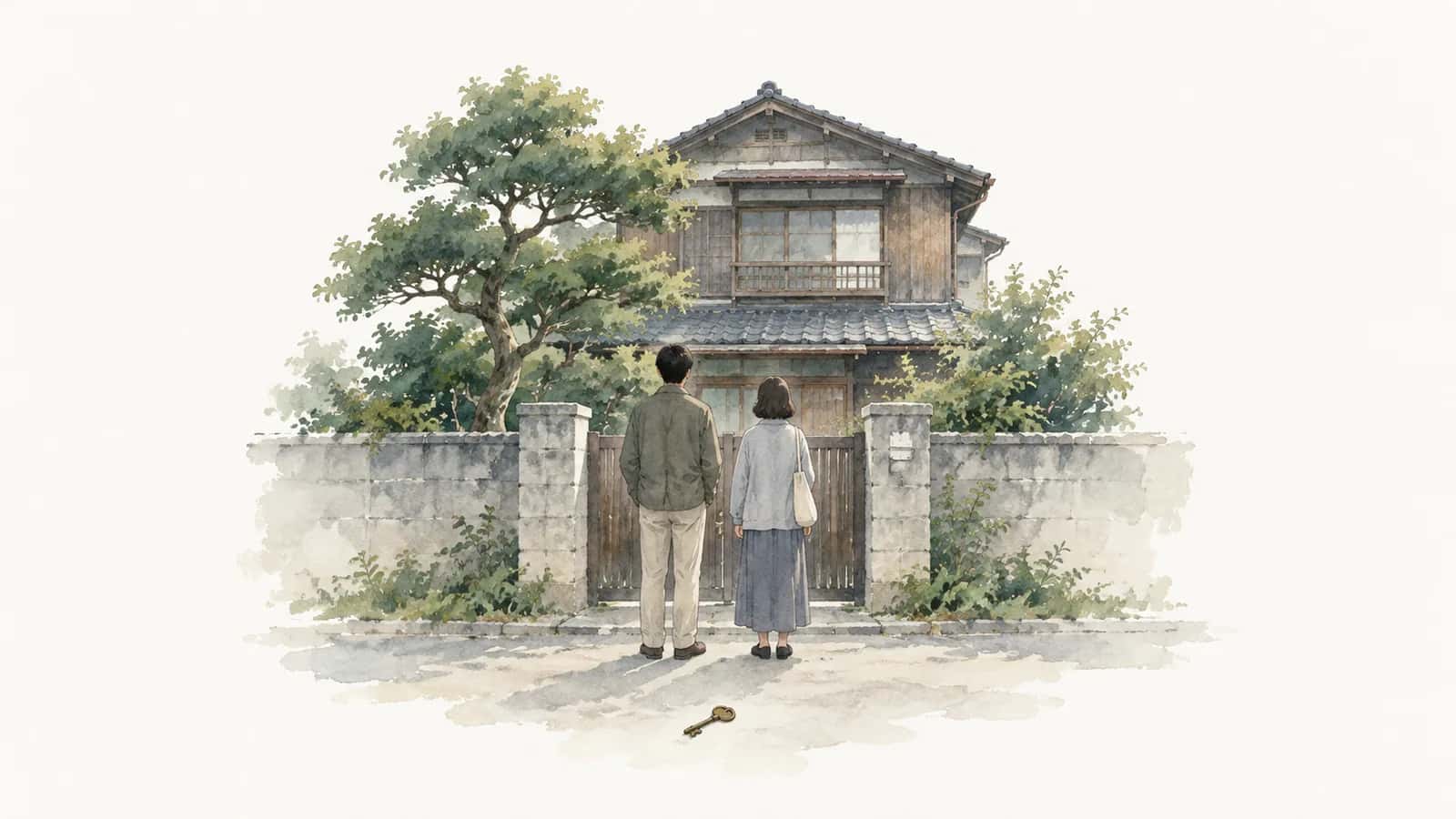

An inherited holiday home or resort condominium can be sold, but the situation differs from a family home you lived in. Four things bite: distant, poorly accessed, thin demand; high management fees and reserve funds where arrears pile up; those arrears pass to the buyer (a specific successor) under the Unit Ownership Act; and it easily becomes a 'negative asset' with no buyer. The routes split into re-pricing, purchase by a company, a take-over operator, and consulting the management association; note that inheritance renunciation and land escheat to the state are hard to use for a property with a building. A licensed real estate agent and administrative scrivener in Bunkyo, Tokyo lays out the options from the statutes.
In short: an inherited holiday home or resort condominium can be sold, but the situation differs from a family home you lived in. Four things get in the way. It is distant, poorly accessed, and demand is thin. Management fees and reserve funds run high, so arrears pile up. Those arrears pass to the buyer (a specific successor) under Article 8 of the Unit Ownership Act. And with no buyer it easily becomes a "negative asset". The means split into re-pricing, purchase by a company, a take-over operator, and consulting the management association — and note that inheritance renunciation and land escheat to the state are hard to use for a property with a building. Start by confirming the management-fee balance and the current state.
"I inherited a distant holiday home or resort condo, only the monthly fees keep going out, and it won't sell even when listed" — this is a common consultation. This article is for heirs who have inherited a resort property they have no use for and are stuck between the burden and the lack of a buyer, laying out the disposal options from the Unit Ownership Act, the Civil Code, the Act on Land Escheat and National Tax Agency materials. We handle appraisal, finding a buyer, sale brokerage and approaching purchase/take-over operators; the change of name by inheritance registration goes to a judicial scrivener, the tax on capital gains, donation or deemed transfer to a licensed tax accountant, and disputes with the management association over arrears to an attorney. The general story of selling a property with fee arrears is touched on in selling or keeping an inherited family home; this article narrows to what is specific to resort and holiday properties — no buyer, "negative asset" status, take-over/donation.
Why is an inherited resort condominium hard to sell?
Because its price is set by "is there someone who wants to use it", not by housing demand. The nature of demand differs from a family home.
First, location. Holiday homes and resort condominiums are often in tourist areas, highlands or by the sea — hard to make a base for daily life — so buyers are limited to "people who want it as a second home". They are sensitive to the economy and leisure demand, and in weak periods they barely move even at a lower price.
Second, holding cost. Resort condominiums often carry hot springs, pools, a front desk and shared facilities, so management fees and reserve funds are not rarely higher than for a residential condominium. They fall due every month whether used or not, and this weighs on the sale price. Buyers factor in "this much will keep going out after I buy", so the heavier the monthly burden, the lower the price.
Third, succession of arrears. If the previous owner (the deceased) had arrears of management fees or reserve funds, that debt passes to the buyer. Article 8 of the Act on Building Unit Ownership, etc. (Unit Ownership Act; Act No. 69 of 1962) provides that a claim for management fees, etc. may be exercised against a specific successor (such as a buyer) of the unit owner who is the debtor. In other words, a unit with arrears moves to the buyer together with those arrears, so buyers either avoid it or adjust the arrears by a price discount.
How are management-fee and reserve-fund arrears sorted out before sale?
First fix the balance, then decide who settles it and by when, as a term of the sale. Without this, no buyer appears.
Ask the management association or management company and fix in writing the amount of arrears in the deceased's name and from when. Where inheritance has occurred, the arrears debt is also part of the estate and is succeeded by the heirs (unless they renounce). On that basis, the sale is usually sorted out in one of the following ways.
| Way of sorting | Content |
|---|---|
| Seller pays off by settlement | Sell with zero arrears at handover; easier to find a buyer |
| Settle from the sale price | At settlement, pay the arrears to the management association from the price and the seller takes the rest |
| Buyer succeeds, with a discount | Factor the arrears into a lower price (they pass to the buyer under Art. 8) |
If delay damages are set in the rules, the longer the arrears run, the more the total swells. The sooner the balance is fixed and the settlement policy decided, the less the take-home is eroded. Where the negotiation with the management association becomes a dispute over the legal responsibility for arrears (prescription, the scope of delay damages, etc.), that belongs to an attorney. We show the view from the real estate side of how the arrears bear on price and the buyer pool.
How do purchase, a take-over operator, and consulting the management association differ?
There are three exits. Use them by the property's state and how urgent it is.
| Exit | Content | Suits |
|---|---|---|
| Sale by brokerage | Find a general buyer / second-home demand | Good location, age and management; you can take time |
| Purchase | A real estate company buys directly | You want out quickly; certainty over price |
| Take-over operator / management association | Conversely pay a fee to have it taken over / consult the association | A "negative asset" of near-zero value with no buyer |
The problem is the third. For a property that only costs management fees and finds no buyer even when listed, some use a "take-over operator", where the owner pays a disposal fee (sometimes in the range of several hundred thousand to several million yen) to have it taken off their hands. In that case, the tax treatment of the fee paid and of parting with the property (capital gains, donation, deemed transfer, etc.) becomes complex, so confirm with a licensed tax accountant before contracting.
Among businesses calling themselves take-over operators, cases of secondary harm are known — taking a high fee while the change of name is never completed. Do not take it at face value; confirm in writing that it is a contract under which the change of name (transfer-of-ownership registration) is completed for certain, and when the management-fee burden switches over. The change of name (transfer-of-ownership registration) belongs to a judicial scrivener. Because the management association may have rules to buy it back, or another unit owner may take it on, consider first consulting the management association / management company.
Can it be let go through inheritance renunciation or land escheat to the state (treatment where there is a building)?
Both are schemes that "can sometimes be used", but for a resort property they are often hard to use, and it is not as easy to let go as one might hope.
Take inheritance renunciation first. Article 915, paragraph 1 of the Civil Code (Act No. 89 of 1896) provides that within three months from knowing that inheritance has commenced for oneself, one chooses simple acceptance, qualified acceptance or renunciation. Renouncing means succeeding to none of the estate including the holiday home, but you also renounce the positive assets (savings, your own home) together, so you cannot separate out and renounce only the resort property. Further, where a renouncer is actually in possession of estate property at the time of renunciation, they owe a duty to preserve it until it is handed over to an heir or the estate liquidator (Art. 940, para. 1). So even after renouncing, you cannot always let go of the management right at once.
Next, land escheat to the state. The Act on Escheat to the State of Land Ownership Acquired by Inheritance, etc. (Land Escheat Act; Act No. 25 of 2021, in force 27 April 2023) lets you escheat land acquired by inheritance, etc. to the state under certain requirements, but land on which a building stands cannot even be applied for (Art. 2, para. 3, item 1).
| Way to let go | Difficulty for a resort property |
|---|---|
| Inheritance renunciation (Civil Code Art. 915, 940) | Cannot renounce only the holiday home; a preservation duty remains if you still possess it after renouncing |
| Land escheat (Land Escheat Act Art. 2 (3) (i)) | Land with a building cannot be applied for; needs the building demolished to bare land, etc. |
A unit-owned resort condominium (a room in a building) is not "land", the object of the escheat scheme, in the first place. So the realistic route to let go of a resort condominium comes back to re-pricing, purchase, a take-over operator and consulting the management association. Whether to renounce must be judged looking at the whole estate, and the period (three months) is short, so if unsure, consult an attorney or judicial scrivener early.
Have a question about your situation?
Tell us about your property search or plans to sell.
Who do you ask for the change of name, tax, disputes and the sale?
Split the windows. Because a resort property involves many professionals, sorting out who does what at the start avoids confusion.
| Task | Who does it |
|---|---|
| Appraisal, finding a buyer, pricing, brokerage, sale contract, approaching purchase/take-over operators | Yotsuba Real Estate Co., Ltd. (licensed real estate agent) |
| Change of name by inheritance registration; transfer-of-ownership registration on take-over | Judicial scrivener |
| Tax on capital gains, donation/deemed transfer, whether the vacant-house special applies | Licensed tax accountant |
| Responsibility for fee arrears, delay damages, litigation with the association | Attorney |
| Inheritance renunciation, estate-division agreements and other documents | Administrative scrivener / judicial scrivener (by content) |
Appraisal, finding a buyer, pricing, brokerage and the contract, and approaching purchase/take-over operators, are handled by Yotsuba Real Estate Co., Ltd. (licensed real estate agent, Tokyo Governor (1) No. 113304). Preparation of estate-division agreements and other documents between the parties is handled by Yotsuba Administrative Scrivener Office (a filing of inheritance renunciation is a procedure to the family court and, by content, belongs to an attorney or judicial scrivener). These are two independent business entities, engaged separately and directly by you. Inheritance and transfer-of-ownership registration go to a judicial scrivener; capital gains, deemed transfer and whether a special applies to a licensed tax accountant; disputes over fee arrears to an attorney — each engaged by you directly. We neither pay nor accept referral fees or introduction commissions. The whole picture of inherited real estate is in consultation on inherited real estate, and the mandatory inheritance registration is in by when must inheritance be registered? Mandatory registration and sale. Consultation is free of charge.
Frequently asked questions
Q. Will the buyer end up paying the previous owner's fee arrears?
A. Yes. Article 8 of the Act on Building Unit Ownership, etc. (Unit Ownership Act) provides that a claim for management fees, etc. may be exercised against a specific successor (such as a buyer) of the unit owner who is the debtor. So a unit with arrears passes to the buyer together with those arrears. That is why the sale first fixes, as a term, whether to pay off by settlement, settle from the price, or adjust by a discount. First ask the management association / management company and fix the balance of arrears and delay damages.
Q. Can I return a resort condominium to the state through land escheat?
A. No. The Land Escheat Act (in force 27 April 2023) is a scheme for "land", and a unit-owned condominium (a room in a building) is out of scope from the start. Even for land, land on which a building stands cannot be applied for (Art. 2, para. 3, item 1). To let go of a holiday home's site by escheat, you need the building demolished to bare land, etc., and to meet the other requirements (a contribution charge, etc.).
Q. Can I renounce only the holiday home I do not use?
A. No. Inheritance renunciation is done for the whole estate; you cannot pick and renounce only the holiday home (Civil Code Art. 915, 938). Renouncing means not succeeding to positive assets such as savings or your own home either. Further, if you actually possess the holiday home at the time of renunciation, a preservation duty remains until handover (Art. 940, para. 1). The decision to renounce must be made looking at the whole estate, within the three-month period, so consult an attorney or judicial scrivener early.
Q. Is it safe to use a "take-over operator" that takes it over for a fee?
A. It is one option, but check the contract carefully. Cases are known of secondary harm where a high fee is taken while the change of name (transfer-of-ownership registration) is never completed. Confirm in writing that the transfer-of-ownership registration is completed for certain and when the management-fee burden switches over, and confirm the change of name with a judicial scrivener. The tax treatment of the fee paid and of parting with it is complex, so consult a licensed tax accountant before contracting.
Sources (primary)
- e-Gov "建物の区分所有等に関する法律" (Act on Building Unit Ownership, etc.) — Act No. 69 of 1962. Art. 7 statutory lien for management fees, etc.; Art. 8 a claim for management fees, etc. may be exercised against a specific successor of the debtor unit owner. Basis for arrears passing to the buyer. Accessed 11 September 2026.
- e-Gov "民法" (Civil Code) — Act No. 89 of 1896. Art. 915 (1) three-month period for acceptance/renunciation; Art. 938 renunciation by filing to the family court; Art. 940 (1) duty to preserve where the renouncer is actually in possession of estate property at the time of renunciation. Accessed 11 September 2026.
- Ministry of Justice, "About the land-escheat system" — Act on Escheat to the State of Land Ownership Acquired by Inheritance, etc. (Act No. 25 of 2021), in force 27 April 2023. Art. 2 (3) (i) land on which a building stands cannot be applied for; the object is "land", so unit-owned buildings are out of scope; a contribution charge is required. Accessed 11 September 2026.
- National Tax Agency, "Special provision on acquisition cost when transferring inherited property" — the framework of capital gains and the add-to-acquisition-cost special when selling inherited real estate. Accessed 11 September 2026.
- National Tax Agency, "Special provision when selling the inherited residential property (vacant house) of the deceased" — Art. 35 (3) of the Act on Special Measures Concerning Taxation. The 30-million-yen special deduction applies to "a house the deceased used as a residence"; a holiday home or second home is out of scope. Accessed 11 September 2026.
The amount of management-fee and reserve-fund arrears, whether delay damages exist, and the association's rules and whether it will buy back all vary by property; first ask the management association / management company and fix the balance. This article does not judge the price of any individual property or the scope of arrears responsibility. Whether inheritance renunciation or land escheat is possible is judged individually by the family court and the Legal Affairs Bureau (the Minister of Justice); this article does not judge or guarantee any individual case.
This article is general information. It does not present any individual legal or tax judgment. Inheritance and transfer-of-ownership registration are done by a judicial scrivener; capital gains, deemed transfer and whether a special applies by a licensed tax accountant; disputes over fee arrears, and the decision to renounce, by an attorney (or a judicial scrivener by content). Appraisal, brokerage and the sale contract, and approaching purchase/take-over operators, are undertaken by Yotsuba Real Estate Co., Ltd. (licensed real estate agent); the preparation of estate-division agreements and other documents by Yotsuba Administrative Scrivener Office — two independent business entities, engaged separately. We neither pay nor accept referral fees.
About the author
Joji Uramatsu — licensed real estate transaction specialist (Tokyo Governor registration No. 293544) and administrative scrivener (registration No. 25087022). Representative Director, Yotsuba Real Estate Co., Ltd. (licensed real estate agent, Tokyo Governor (1) No. 113304); principal, Yotsuba Administrative Scrivener Office. Kohinata, Bunkyo, Tokyo, about five minutes' walk from Myogadani station. For inherited resort properties, the succession of management fees and arrears and the deadlines of registration and tax are put on the same table. Full profile: author page.
Related Articles
- 2026.10.23Inheritance
Can inherited land be sold if it is in a 'fill-regulation area'? The 2023 regulation and the steps to a sale
- 2026.10.22Inheritance
If an heir has dementia, can't the inherited real estate be sold? Adult guardianship and permission to dispose of residential property
- 2026.10.20Inheritance
Selling inherited real estate when an executor has been appointed: who is the seller, and who are the parties to the brokerage and settlement?
Feel free to reach out for a consultation
Questions about our column articles are also welcome.
Sell, rent out, or keep — start with a conversation before you decide.
An inherited family home, a property you own while living abroad, a tenanted building — send us a line on LINE about your situation. Our representative (a Licensed Real Estate Transaction Specialist) replies personally and lays out the outlook for selling, renting out, or keeping it. Appraisal and brokerage are handled solely by Yotsuba Real Estate Co., Ltd.
LINE connects you directly to our representative, Joji Uramatsu. Messages are accepted 24/7 and answered in order.
5 min walk from Myogadani Sta. (Tokyo Metro Marunouchi Line)|10:00–18:00 (Closed Tue & Wed)