



Encroachment (fence, tree, eaves) on inherited real estate: the memorandum and the amended Civil Code art. 233, and how to proceed with a sale
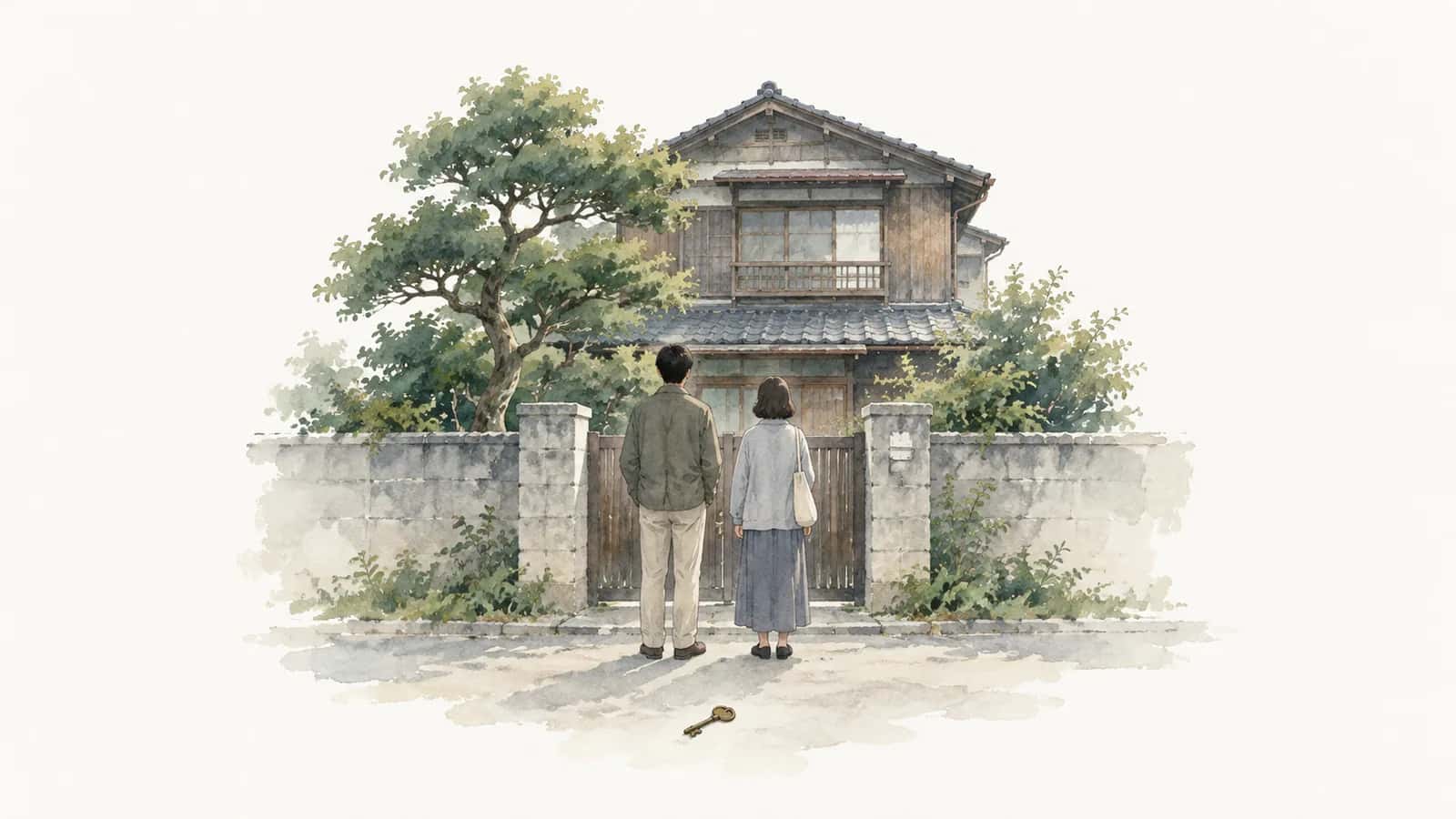

Even if inherited real estate has an encroachment—a fence, tree branches or eaves—you can sell it. What matters for the sale is whether the encroachment can be explained to the buyer as an important matter, whether a 'memorandum on encroachment' promising future correction can be exchanged with the neighbour and passed to the buyer, and whether the boundary (lot line) is clear. The amended Civil Code art. 233, in force from 1 April 2023, allows you to cut an overhanging branch yourself in limited cases, but the principle is still 'have the owner of the tree cut it.' Yotsuba Real Estate Co., Ltd. handles the encroachment survey, important-matters explanation and brokerage; the boundary-confirmation survey goes to a land and house surveyor, the memorandum to an administrative scrivener, inheritance registration to a judicial scrivener, disputes to a lawyer, and inheritance tax to a tax accountant, under separate, independent contracts.
The key point: Even if inherited real estate has an encroachment—a fence, tree branches or eaves—you can sell it. What matters for the sale is whether the encroachment can be explained to the buyer as an important matter, whether a "memorandum on encroachment" promising future correction can be exchanged with the neighbour and passed to the buyer, and whether the boundary (lot line) is clear. The amended Civil Code art. 233, in force from 1 April 2023, allows you to cut an overhanging branch yourself in limited cases, but the principle is still "have the owner of the tree cut it." We (a real-estate transaction business) handle the encroachment survey, the important-matters explanation and the brokerage; the boundary-confirmation survey goes to a land and house surveyor, the memorandum to an administrative scrivener, inheritance registration to a judicial scrivener, disputes with the neighbour to a lawyer, and inheritance tax to a tax accountant, each an independent business contracted with separately (no referral fees are exchanged).
For heirs who have inherited a family home or land with an encroachment at the boundary and want to sell, and the real-estate staff brokering it, this article organises "does an encroachment mean it can't be sold" and "what to tackle first," in the order of the amended Civil Code and the Real Estate Brokerage Act. This is general information; the final judgment on how to handle a particular encroachment, whether a branch may be cut, and where the boundary is rests with a lawyer, a land and house surveyor, and the agreement between the parties.
Yotsuba Real Estate Co., Ltd. (四葉不動産株式会社), based in Bunkyo, Tokyo, provides appraisal of inherited real estate and sale brokerage. For land with an encroachment at the boundary, you can consult us from what can be confirmed before selling.
What makes an encroachment a problem for the sale of inherited real estate?
The encroachment itself does not bar a sale. The problems are the need to explain it as an important matter so the buyer does not "buy without knowing," and that the buyer and the buyer's lender (a financial institution) care about the outlook for future correction.
An encroachment can be yours—a fence, eaves or tree branches extending into the neighbour's land—or the neighbour's, extending into yours. In an inherited home, it often turns up as a hedge that has grown over the line over the years, an old fence straddling the boundary, or eaves projecting over the neighbour's side.
| Type of encroachment | What matters for the sale |
|---|---|
| Branch / root over the line | Handling under amended Civil Code art. 233 / art. 234. Branches, in principle, "have them cut"; roots you may cut |
| Fence / retaining-wall encroachment | Ownership and the boundary position; overlaps with selling land with a retaining wall (Japanese) |
| Eaves / part of a building over the line | Building near the boundary (Civil Code art. 234) and correction at rebuild |
| Boundary itself undetermined | The encroachment cannot be fixed; survey and confirming the lot line come first |
When a real-estate broker brokers a sale, it explains, in the important-matters explanation under Real Estate Brokerage Act (Act No. 176 of 1952) art. 35, matters that materially affect the transaction decision. Whether there is an encroachment, its content, and whether a correction promise exists tie directly to the buyer's use of the land and future burden, so it is practice to explain them. We check the current state of the encroachment on site and from records, and reflect it accurately in the important-matters explanation.
Under amended Civil Code art. 233, how far can you cut a neighbour's branch?
The principle is still "have the owner of the neighbour's tree cut the overhanging branch." The amendment in force from 1 April 2023 allows the encroached-on side to cut the branch itself only in limited cases. Roots you may cut yourself, as before.
The framework of Civil Code art. 233 (amended by Act No. 24 of 2021; in force 1 April 2023) is as follows.
| Paragraph | Content |
|---|---|
| Art. 233 (1) | Where a neighbour's tree branch crosses the boundary, you may have the tree's owner cut the branch (principle) |
| Art. 233 (2) | Where the tree is co-owned, each co-owner may cut the overhanging branch |
| Art. 233 (3) | You may cut the branch yourself where: ① you demanded the owner cut it but they do not within a reasonable period; ② you cannot know the owner or their whereabouts; or ③ there is an urgent circumstance |
| Art. 233 (4) | Where a neighbour's tree root crosses the boundary, you may cut the root |
Before the amendment, for branches you had to "have them cut" or, if refused, sue, obtain a judgment and enforce it. The principle is unchanged after the amendment: only when one of "demand and wait a reasonable period," "owner unknown," or "urgent" applies may you cut it yourself (para. 3). The reasonable period depends on the case, but some municipal explanations give about two weeks as an example. Cutting on your own judgment can instead expose you to a damages claim, so judging which requirement applies is a lawyer's field. Where part of a building (eaves, etc.) encroaches, Civil Code art. 234—requiring a building to be set back at least 50 cm from the boundary—is relevant, and a claim to correct a violation is subject to a time limit (damages only after one year from start of work or after completion; art. 234 (2)). We do not assert whether cutting or correction is permissible.
What should the memorandum on encroachment say?
Where an encroachment cannot be resolved at once, it is practice to exchange a "memorandum on encroachment (confirmation)" with the neighbouring owner—confirming the current state, promising correction at a future rebuild/renovation, and binding the buyer (a third party) to that promise.
A memorandum generally includes the following (it varies with the circumstances).
| Item | What to write |
|---|---|
| Identifying the encroachment | Which thing (fence, branch, eaves) crosses, from which side and in what range; identified by survey drawing/photos |
| Mutual confirmation of status | That removal will not be demanded immediately in the current state |
| Future correction | That the encroachment will be resolved at the chance of a rebuild/renovation/tree renewal |
| Succession | That the memorandum binds even if the owner changes (by sale or inheritance) |
| Cost-bearing | Who bears the correction cost |
Such a memorandum is work an administrative scrivener prepares as a document concerning rights and duties. Where the parties are in conflict over the fact of the encroachment or the need for correction, it can become negotiation, mediation or litigation—a lawyer's field. We arrange the current state of the encroachment and the boundary records that underlie the memorandum, and separate out the memorandum's preparation to an administrative scrivener and an unresolved dispute to a lawyer. These are each independent businesses, contracted with separately. We neither receive nor pay referral or introduction fees.
When the boundary is undetermined, who do you ask for what?
Whether and how far there is an encroachment cannot be fixed without knowing where the boundary (lot line) is. Surveying and confirming the lot line is the exclusive field of a land and house surveyor. Completing a boundary-confirmation survey or lot-line determination before selling makes the encroachment explanation and the memorandum reliable.
The Land and House Surveyor Act (Act No. 228 of 1950) makes the surveying related to a land's lot line (the public-law boundary), registration of land/building descriptions, and agency in lot-line-determination procedures the business of a land and house surveyor. There is a "confirmation survey" that confirms the boundary with the neighbouring owner present and produces a confirmed survey drawing, and a "lot-line-determination system" by which the Legal Affairs Bureau (the lot-line registrar) clarifies the lot line when it is unclear.
| Trouble | Who to ask |
|---|---|
| Survey and produce a confirmed survey drawing; check boundary markers | Land and house surveyor |
| Apply for lot-line determination where the line is unclear | Land and house surveyor (agency) |
| Prepare a memorandum/agreement on encroachment | Administrative scrivener |
| Dispute over the boundary/encroachment with the neighbour (negotiation, mediation, litigation) | Lawyer |
| Inheritance registration; registration of a building description | Judicial scrivener / land and house surveyor |
Have a question about your situation?
Tell us about your property search or plans to sell.
With the boundary determined, the area and position of the encroachment can be worked into the important-matters explanation and the memorandum. Where a private-road share or access is involved, see selling inherited land with a private-road share (Japanese); for the flow from a boundary-confirmation survey to a sale, how to proceed from a boundary-confirmation survey to the sale of inherited real estate (Japanese). We check existing survey drawings and the registration status, and help with the outlook on whether a confirmation survey or lot-line determination is needed and the referral to a land and house surveyor.
How can you sell with the encroachment left, and how does it affect the price?
There is a way of resolving the encroachment before selling and a way of selling with the encroachment left, with a memorandum attached. Which to choose depends on the difficulty, cost and time of correction and on how the buyer and lender take it. The price can be affected by the estimated correction cost and the buyer's trouble.
| How to sell | Point |
|---|---|
| Resolve the encroachment, then sell | Rebuild the fence, cut the branch, alter the eaves to remove the encroachment; needs cost and the neighbour's cooperation |
| Leave the encroachment, sell with a memorandum | Sell as-is, with a memorandum promising future correction passed to the buyer; sells well if the explanation and document are in order |
| Sell with the boundary/encroachment still disputed | Price tends to fall and buyers/financing are hard to get; resolving the dispute first is the right order |
Where the buyer uses a mortgage, the financial institution may check the outlook for correction (whether a memorandum exists). If the memorandum is in order, it is not unusual for the transaction to proceed even with the encroachment left. How much the price is affected varies with the content of the encroachment, the correction cost and the location, and is assessed individually in the appraisal. We take consultations from comparing "sell after resolving" and "sell as-is with a memorandum" and the arrangement of who to ask for what in each. Inheritance-tax valuation and capital-gains tax are a tax accountant's field, inheritance registration a judicial scrivener's, and disputes a lawyer's; we do not assert tax amounts or who wins.
In your message, write "sale of inherited real estate with an encroachment" and include the situation of the encroachment (fence, branch, eaves, etc.), whether the boundary is confirmed, and the state of the inheritance registration. Without presuming whether it can be sold, we begin with checking the encroachment and the boundary and organising who to refer each part to.
Frequently asked questions
Q. May I cut a branch that has grown over from the neighbour's land?
A. The principle is to have the tree's owner cut the overhanging branch (Civil Code art. 233 (1)). The amendment in force from 1 April 2023 lets you cut it yourself where: ① you demanded the owner cut it but they do not within a reasonable period; ② you cannot know the owner or their whereabouts; or ③ there is an urgent circumstance (art. 233 (3)). Cutting without meeting a requirement can expose you to a damages claim, and judging which applies is a lawyer's field. A root over the line you may cut yourself, as before (art. 233 (4)).
Q. Does an encroachment mean the inherited home cannot be sold?
A. It can be sold. The encroachment itself does not bar a sale. In practice, the existence and content of the encroachment is explained to the buyer as an important matter, and an encroachment that cannot be resolved at once is covered by a "memorandum on encroachment" with the neighbour promising future correction and passed to the buyer. If the memorandum is in order, the transaction often proceeds even with the encroachment left. We handle the explanation and the documentation; an administrative scrivener prepares the memorandum.
Q. Who prepares the memorandum on encroachment?
A. As a document concerning rights and duties, it is work an administrative scrivener prepares. The memorandum includes identifying the encroachment, mutual confirmation of the current state, a promise to correct at a future rebuild/renovation, binding a successor even if the owner changes, and cost-bearing. Where the parties are in conflict over the fact or the correction, it can become negotiation, mediation or litigation—a lawyer's field. We arrange the current state and the boundary records underlying the memorandum and connect you to an administrative scrivener/lawyer.
Q. When the boundary is unclear, what should I start with?
A. Surveying and confirming the boundary (lot line) is the exclusive field of a land and house surveyor (Land and House Surveyor Act). There is a confirmation survey done with the neighbour present, and a lot-line-determination system by which the Legal Affairs Bureau clarifies the line when it is unclear. With the boundary determined, the range of the encroachment can be shown by measurement in the important-matters explanation and the memorandum. We check existing survey drawings and the registration status and help with the outlook on whether a confirmation survey or lot-line determination is needed and the referral to a land and house surveyor.
Sources
The following public materials are starting points. Laws are amended, so check the current text, paragraph, item, enforcement date and latest amendment on e-Gov Law Search. How an encroachment is handled and what a memorandum says vary with the circumstances. All were consulted on 25 October 2026. They do not establish the handling of a particular encroachment, whether a branch may be cut, or where the boundary is. The sources below are in Japanese.
- e-Gov Law Search: Civil Code (Act No. 89 of 1896; art. 233 = cutting an overhanging tree branch [(1) principle = have the owner cut; (2) a co-owned tree; (3) cases where you may cut yourself; (4) cutting roots]; art. 234 = restriction on building near the boundary [50 cm; claim to stop/change; one year from start of work, etc.]. Art. 233 was amended by Act No. 24 of 2021, in force 1 April 2023)
- Ministry of Justice: Act Partially Amending the Civil Code and Others (Act No. 24 of 2021) (explanation of the amendment including the review of neighbouring relations; the review of cutting an overhanging tree branch; consulted 25 October 2026)
- e-Gov Law Search: Real Estate Brokerage Act (Act No. 176 of 1952; art. 35 = explanation of important matters; the duty to explain matters materially affecting the transaction decision to the buyer)
- e-Gov Law Search: Land and House Surveyor Act (Act No. 228 of 1950; surveying related to a land's lot line, registration of descriptions, and agency in lot-line-determination procedures are a land and house surveyor's business)
This article provides general information and does not guarantee how a particular encroachment is handled, whether a branch may be cut, the memorandum's effect, where the boundary is, or the effect on price. Whether cutting or correction is permissible, and disputes, are judged by a lawyer; surveying and lot-line determination by a land and house surveyor; preparing the memorandum by an administrative scrivener; inheritance registration by a judicial scrivener; and inheritance-tax valuation and capital-gains tax by a tax accountant.
Joji Uramatsu (浦松 丈二), Representative Director and licensed real estate transaction specialist, Yotsuba Real Estate Co., Ltd. (四葉不動産株式会社). We provide appraisal of inherited real estate and sale brokerage. Author profile
Updated: 25 October 2026
Previous article
What premises can house an integrated community care service (kango-shokibo-takino)? Zoning, fire, and area checks for combining day visits, overnight stays, and home-visit nursing under one roof
Next article
Property requirements for a (combined-type) certified child center: use-zone, nursery-building and yard area, and in-house cooking facilities
Related Articles
- 2026.11.02Inheritance
The record of the system for returning inherited land to the State: what land was rejected or not approved
- 2026.11.01Inheritance
Inherited land sits on a planned city-planning road: how do I sell it?
- 2026.10.31Inheritance
The inherited land abuts a waterway or an 'akamichi' (an extra-legal public object). To sell, do I need a use-abolition and a sell-off?
Feel free to reach out for a consultation
Questions about our column articles are also welcome.
Sell, rent out, or keep — start with a conversation before you decide.
An inherited family home, a property you own while living abroad, a tenanted building — send us a line on LINE about your situation. Our representative (a Licensed Real Estate Transaction Specialist) replies personally and lays out the outlook for selling, renting out, or keeping it. Appraisal and brokerage are handled solely by Yotsuba Real Estate Co., Ltd.
LINE connects you directly to our representative, Joji Uramatsu. Messages are accepted 24/7 and answered in order.
5 min walk from Myogadani Sta. (Tokyo Metro Marunouchi Line)|10:00–18:00 (Closed Tue & Wed)