



Opening an after-school children's club: the notification, the roughly 1.65 m² per child, and support-staff placement
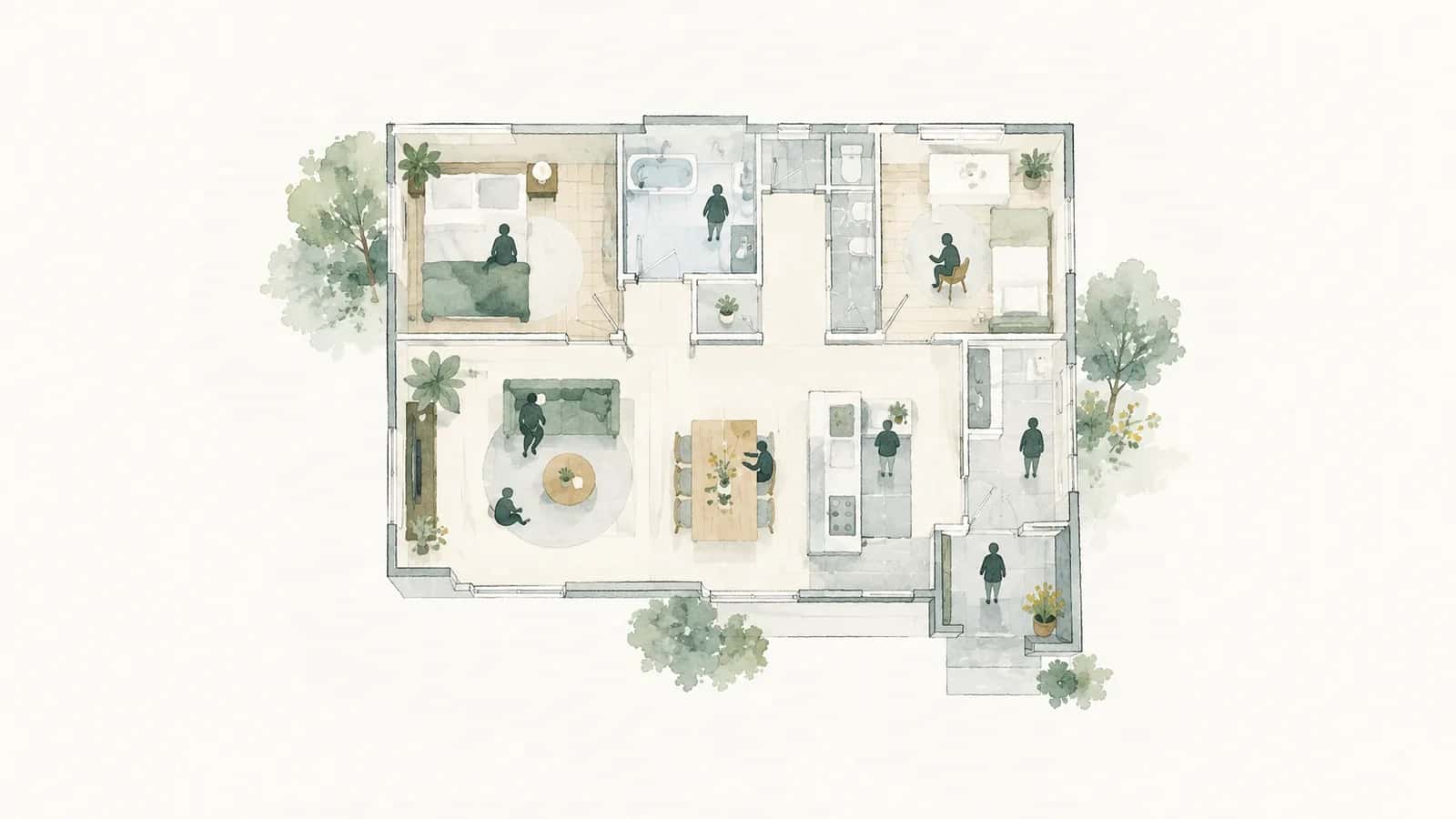

An after-school children's club (after-school child sound-upbringing project) cares for elementary-school children after school. If you are not a municipality, prefecture or the state, you notify the mayor in advance (Article 34-8, paragraph 2 of the Child Welfare Act). This article organises the notification and the facility-and-operation standards from an administrative scrivener's view.
In short: an after-school children's club (in law, the "after-school child sound-upbringing project") cares for children enrolled in elementary school after school. If you are someone other than a municipality, prefecture or the state, you must notify the mayor of the municipality in advance before you begin (Article 34-8, paragraph 2 of the Child Welfare Act). Facilities and operation follow standards the municipality sets by ordinance (Article 34-8-2 of the same Act), and that ordinance refers to the national standard — the Standards for the Facilities and Operation of the After-school Child Sound-upbringing Project (Order of the Ministry of Health, Labour and Welfare No. 63 of 2014). The dedicated space must be roughly 1.65 square metres or more per child, and after-school child support staff must be at least two per unit of support. It is a different system from after-school day services for children with disabilities (Article 6-2-2, paragraph 3 of the Child Welfare Act). This article organises the notification and the facility-and-operation standards from an administrative scrivener's view as general information; it does not judge whether the standards are met or give individual legal advice. Preparing the notification documents is for the administrative scrivener, the labour, shifts and social insurance of support staff for a labour and social security attorney, checking the zoning and floor area of the premises for a real estate broker, building confirmation such as lighting and evacuation for an architect, and the feasibility of firefighting equipment for the fire department — each handed off separately, on the premise that you contract with each as an independent business.
Who notifies whom for an after-school children's club?
An after-school children's club is legally the "after-school child sound-upbringing project." Article 6-3, paragraph 2 of the Child Welfare Act defines it as "a project that, for children enrolled in elementary school whose guardians are not at home during the daytime owing to work or the like, uses facilities such as child welfare facilities after class to provide an appropriate place for play and living, thereby promoting their sound upbringing." The target is elementary-school children, on the premise that the guardian is not at home in the daytime.
The procedure depends on who runs it. A municipality may run the project without notifying (Article 34-8, paragraph 1). Anyone other than the state, a prefecture or a municipality (a private operator, NPO, social welfare corporation, and so on) must notify the mayor of the municipality in advance when they intend to run it (paragraph 2 of the same Article). This is a notification before starting — the opposite order from an unlicensed childcare facility, which notifies within one month after starting (Article 59-2 of the Child Welfare Act).
| Operator | Procedure | Basis |
|---|---|---|
| Municipality | May run it without notifying | Child Welfare Act Article 34-8, paragraph 1 |
| Anyone other than the state, a prefecture or a municipality | Notify the mayor in advance | Child Welfare Act Article 34-8, paragraph 2 |
| Change, suspension or closure of notified matters | Notify as the municipality provides | Child Welfare Act Article 34-8, paragraph 2, etc. |
The form, where to file, and attachments (articles of incorporation, operation rules, a business plan, a staff roster, floor plans, and so on) differ by municipality. It is safest to check the official page of the ward or city where you are opening directly. Within the scope of administrative-scrivener work, Yotsuba Administrative Scrivener Office supports preparing and filing the notification documents.
How many square metres per child does the dedicated space need (the basis for roughly 1.65 m²)?
The municipality sets the facility-and-operation standards by ordinance (Article 34-8-2, paragraph 1 of the Child Welfare Act). In doing so, the municipality refers to the national standard, the Standards for the Facilities and Operation of the After-school Child Sound-upbringing Project (Order of the Ministry of Health, Labour and Welfare No. 63 of 2014). So what ultimately binds an operator is "that municipality's ordinance," and the figures may be raised or adjusted by locality.
The main points of the national standard on facilities are as follows.
| Item | Main content of the national standard | Basis |
|---|---|---|
| Dedicated space | Provide a space with functions as a place for play and living and for rest | Order No. 63 of 2014, Article 9, paragraph 1 |
| Floor area | The dedicated space must be roughly 1.65 square metres or more per child | Same Order, Article 9, paragraph 2 |
| Equipment | Provide the equipment and supplies needed to deliver support | Same Order, Article 9, paragraph 1 |
For example, if one unit of support is 40 children, roughly 40 × 1.65 = 66 square metres or more of dedicated space is one benchmark. Because the scope counted toward the area and any higher local standard differ by ordinance, check the municipality's ordinance and the responsible section before deciding on premises. Whether the premises pass on the building side — zoning, lighting, evacuation — is checked separately as the field of a real estate broker and an architect.
How are support-staff qualifications and numbers decided?
An after-school child support worker must be placed (Order No. 63 of 2014, Article 10, paragraph 1). The number is at least two per unit of support, and all but one of them may be replaced by an assistant (paragraph 2 of the same Article). The number of children making up one unit of support is roughly 40 or fewer (paragraph 4 of the same Article).
To be an after-school child support worker, a person must fall under one of the items of Article 10, paragraph 3 — such as a childcare worker, a certified social worker, or a person with certain teaching qualifications — and have completed training given by the prefectural governor or the mayor of a designated or core city (the same paragraph).
| Item | Content of the national standard | Basis |
|---|---|---|
| Placement | At least two per unit of support (all but one may be an assistant) | Same Order, Article 10, paragraph 2 |
| Unit of support | Roughly 40 children or fewer | Same Order, Article 10, paragraph 4 |
| Qualification | One of the items of Article 10, paragraph 3, plus completion of training given by the prefectural governor, etc. | Same Order, Article 10, paragraph 3 |
The standard for the qualifications and number of after-school child support workers used to be a "standard to comply with," which a municipality had to follow in its ordinance, but by the 9th Omnibus Decentralisation Act (Act No. 26 of 2019) it was changed to a "standard to give consideration to" from 1 April 2020. So how much is actually required must be checked in each municipality's ordinance. Employment contracts, work rules, shifts and social-insurance coverage based on the staffing plan are the labour field, handled by a labour and social security attorney under a separate contract.
How does it differ from after-school day services?
Despite the similar names, an after-school children's club and after-school day services are different systems. After-school day services are one form of ambulatory support for children with disabilities, defined in Article 6-2-2, paragraph 3 of the Child Welfare Act, providing support to children with disabilities enrolled in school after class or on holidays. The entry procedure also differs: whereas an after-school children's club is a notification to the mayor, after-school day services use a designation system requiring designation by the prefectural governor, and the cost is paid as an ambulatory-support benefit for children with disabilities.
Have a question about your situation?
Tell us about your residency, permit or administrative procedure enquiry.
| Item | After-school children's club | After-school day services |
|---|---|---|
| Main target | Elementary-school children (guardian not at home in the daytime) | Children with disabilities enrolled in school |
| Basis | Child Welfare Act Article 6-3, paragraph 2 | Child Welfare Act Article 6-2-2, paragraph 3 |
| Entry procedure | Notification to the mayor | Designation by the prefectural governor, etc. |
| Funding mechanism | Each locality's operating costs, etc. | Ambulatory-support benefit for children with disabilities |
The flow of designation for after-school day services and child development support is covered in The flow of designation for after-school day services and child development support. An unlicensed childcare facility caring for infants has a different notification timing and basis; see The notification and supervision standards for unlicensed childcare facilities. Deciding which system applies at the very start is the starting point for choosing premises and the procedure.
The steps to opening, and when to hand off to other professionals
Opening an after-school children's club is not completed by administrative procedure alone. The rough flow and division of roles are as follows, each on the premise that you contract separately as an independent business.
- Distinguish the system (after-school children's club, after-school day services, or unlicensed childcare facility)
- Select premises and check zoning, floor area, lighting and evacuation
- Check the municipality's ordinance and standards and the notification form
- Secure staff (support workers and assistants) and plan their placement
- Notify in advance before opening (Article 34-8, paragraph 2 of the Child Welfare Act)
- Preparing and filing the notification, and checking the ordinance standards → Yotsuba Administrative Scrivener Office (administrative scrivener)
- Work rules, shifts, employment contracts and social insurance matching the placement of support workers and assistants → a labour and social security attorney (Yotsuba Labour and Social Security Attorney Office)
- Checking the zoning and floor area of the premises, and the lease and important-matters explanation → a real estate broker (Yotsuba Real Estate Co., Ltd., a separate business)
- Building-code checks such as lighting, smoke exhaust and evacuation, and change of use → an architect
- Feasibility of firefighting equipment → the fire department and equipment contractors
Zoning and floor area often become issues from the stage of choosing premises, so the real estate side's checks and the administrative procedure run in parallel. For the whole picture of administrative-scrivener services, see Services; for the flow of engagement, see Engagement Flow; and for fees, see Fee Schedule. Yotsuba Administrative Scrivener Office, Yotsuba Labour and Social Security Attorney Office and Yotsuba Real Estate Co., Ltd. are each a separate business, and every field is on the premise that you contract separately with each as an independent business. Our office receives no referral fee.
FAQ
Q. When do I notify to open an after-school children's club privately?
A. Anyone other than the state, a prefecture or a municipality notifies the mayor in advance when they intend to run the project (Article 34-8, paragraph 2 of the Child Welfare Act). This is a notification before starting. The form, where to file, and attachments differ by municipality, so check the official page and responsible section of the ward or city where you are opening.
Q. How many square metres per child does the dedicated space need?
A. Under the national standard, the dedicated space must be roughly 1.65 square metres or more per child (the Standards for the Facilities and Operation of the After-school Child Sound-upbringing Project — Order of the Ministry of Health, Labour and Welfare No. 63 of 2014, Article 9, paragraph 2). Since what actually binds an operator is the municipality's ordinance, check it, including any higher local standard.
Q. How many after-school child support workers must I place?
A. Under the national standard, place at least two per unit of support, and all but one may be replaced by an assistant (same Order, Article 10, paragraph 2). The number of children in one unit of support is roughly 40 or fewer (paragraph 4 of the same Article). Since the standard for support-worker qualifications and numbers became a "standard to give consideration to" from 1 April 2020, check the ordinance.
Q. Is it the same procedure as after-school day services?
A. It is a different system. After-school day services are ambulatory support for children with disabilities (Article 6-2-2, paragraph 3 of the Child Welfare Act), using a designation system with designation by the prefectural governor, etc. An after-school children's club targets elementary-school children and is run by notifying the mayor.
Sources (Primary Information)
- e-Gov Law Search, "Child Welfare Act" (Act No. 164 of 1947), Article 6-3, paragraph 2 (definition of the after-school child sound-upbringing project), Article 6-2-2, paragraph 3 (definition of after-school day services), Article 34-8 (notification by parties other than a municipality) and Article 34-8-2 (standards set by ordinance) (accessed 2026-09-28)
- e-Gov Law Search and the Ministry of Health, Labour and Welfare, "Standards for the Facilities and Operation of the After-school Child Sound-upbringing Project" (Order of the Ministry of Health, Labour and Welfare No. 63 of 2014), Article 9 (facilities / dedicated space / roughly 1.65 square metres or more per child), Article 10 (placement, unit of support and qualifications of after-school child support workers) and Article 18 (opening hours and days) (accessed 2026-09-28)
- Cabinet Office, "Decentralisation Reform"; the 9th Omnibus Decentralisation Act (Act No. 26 of 2019) changing the support-worker standard from a "standard to comply with" to a "standard to give consideration to" (effective 1 April 2020; accessed 2026-09-28)
- Children and Families Agency, "Laws and notices on the after-school child sound-upbringing project (after-school children's clubs)" and the "Operation Guidelines for After-school Children's Clubs" (accessed 2026-09-28)
This article is general information and does not make the final judgement on whether the standards are met, nor give advice on contentious individual matters such as acceptance or non-acceptance of a notification or objecting to an administrative disposition. Figures and forms may be revised and differ by municipality, so check the ordinance and the latest guidance of the ward or city where you are opening. The labour and placement of support staff is handled by a labour and social security attorney, the zoning and floor area of the premises by a real estate broker, building confirmation and change of use by an architect, and firefighting equipment by the fire department, each as an independent business under a separate contract. Consultation on premises is handled by Yotsuba Real Estate Co., Ltd., a separate business, and our office receives no referral fee. Individual judgements are made by a qualified professional after a meeting. Written by Joji Uramatsu, administrative scrivener and licensed real estate broker.
Previous article
Does a duty to look after the family home remain even after renouncing inheritance? The 2023-amended Civil Code Article 940, explained
Next article
Which country's law governs the inheritance of a foreign national? Article 36 of the Act on General Rules for Application of Laws, renvoi, and Japanese real estate
Let's start by sorting out your situation.
Yotsuba Gyoseishoshi Office (Kohinata, Bunkyo-ku; a 5-minute walk from Myogadani Station on the Tokyo Metro Marunouchi Line) supports you from organizing the requirements through document preparation and application.
LINE connects you directly to our representative, Joji Uramatsu. Messages are accepted 24/7 and answered in order.
5 min walk from Myogadani Sta. (Tokyo Metro Marunouchi Line)|Tue & Wed 10:00–19:00 / Mon, Thu–Sun 18:00–19:00