



General freight transport business permit: what must the office and garage satisfy?
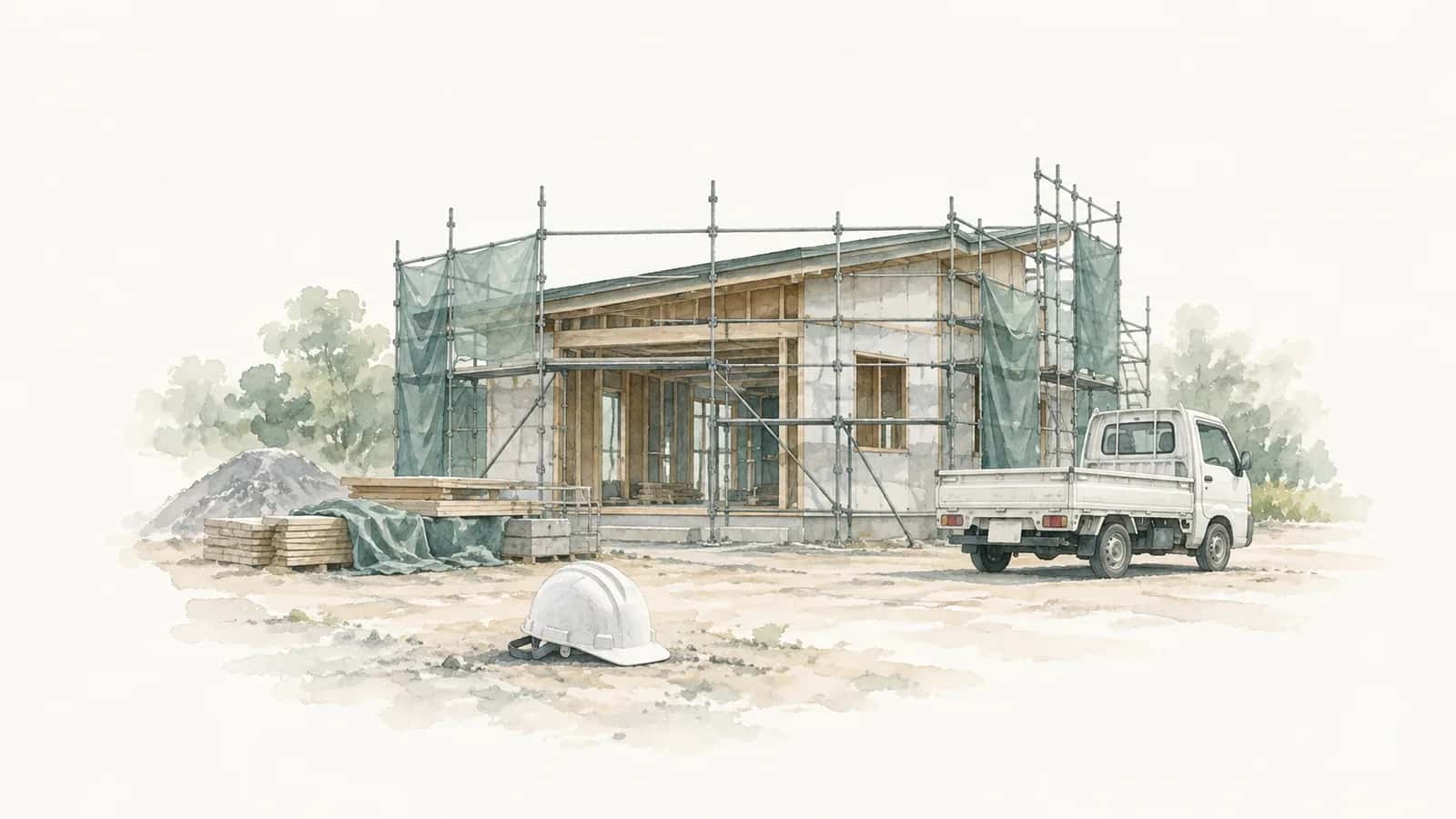

To run a truck transport business (general freight motor vehicle transport), you need a permit under Article 3 of the Motor Truck Transport Business Act. This article organises the office, garage and rest-and-sleep facility requirements, the frontage-road and zoning pitfalls, the standard processing period, and who to hand the property, vehicles and labour matters to.
In short: to start a truck transport business (general freight motor vehicle transport), you need a permit from the Minister of Land, Infrastructure, Transport and Tourism (in practice, the head of the District Transport Bureau) under Article 3 of the Motor Truck Transport Business Act. The permit is granted when you meet the standards in Article 6 of the same Act — the business plan is appropriate for ensuring transport safety, the number of business vehicles (at least five) and the scale of the garage meet the standards set by ministry ordinance, and you have the economic foundation and other ability to conduct the business properly by yourself. This article is general information organising the location and size of the office, garage and rest-and-sleep facility, the frontage-road and zoning points where applications fail, the standard processing period, and who to hand the property, vehicles and labour matters to. The outcome of any individual permit is a matter for the Transport Branch Office and the District Transport Bureau.
What must you satisfy for a general freight motor vehicle transport permit?
General freight motor vehicle transport is the business of transporting cargo for consideration, in response to the demand of others, using automobiles (excluding light vehicles with three or more wheels and two-wheeled vehicles). To start it, Article 3 of the Motor Truck Transport Business Act requires a permit.
The permit standards are set out in Article 6 of the same Act; in summary:
| Category | Content (summary) |
|---|---|
| Transport safety (Article 6, item 1) | The business plan is appropriate for ensuring transport safety, such as preventing overwork driving and the safety of business vehicles |
| Appropriate business plan (Article 6, item 2) | The number of business vehicles, the scale of the garage and other elements of the plan meet the standards set by ministry ordinance |
| Ability to conduct (Article 6, item 3) | You have the economic foundation and other ability to conduct the business properly and continuously by yourself |
| Special consolidated transport (Article 6, item 4) | Where you carry out special consolidated freight transport, you appropriately hold and manage loading facilities and take accident-prevention measures |
In addition, you must not fall under the disqualifications in Article 5 of the Act (such as a person for whom a certain period has not passed since a permit was revoked), one of the standing officers must pass the law examination, you must be able to appoint an operation manager and a maintenance manager, and you must estimate the required funds and secure your own capital. You must prepare at least five business vehicles. Within the scope of administrative-scrivener work, Yotsuba Administrative Scrivener Office supports confirming the requirements, preparing the business plan and application documents, and acting as agent for the application. The outcome of any individual permit is a matter for the Transport Branch Office and the District Transport Bureau.
What are the location and size requirements for the office, rest-and-sleep facility and garage?
The office, rest-and-sleep facility and garage each have requirements for location, size and title to use.
| Facility | Main requirements |
|---|---|
| Office | Title to use (ownership, or a lease; a lease should have a term of one year or more or automatic renewal). A building compliant with the Building Standards Act and the Fire Service Act. In principle it cannot be located in an urbanisation control area. Land whose category is farmland (paddy/field) is in principle not allowed |
| Rest-and-sleep facility | Attached to the office or the garage. Where drivers must be given sleep, a sleep facility of at least 2.5㎡ per person is required. Where the operating pattern secures at least eight hours of rest for drivers, a sleep facility may be unnecessary |
| Garage | In principle attached to the office. If it cannot be attached, within a set distance from the office (see below). It can hold all the planned business vehicles, with a clearance of at least 50 centimetres between a vehicle and the garage boundary and between vehicles |
The office and garage must be in a place that does not conflict with related laws such as the City Planning Act, the Building Standards Act and the Agricultural Land Act. If you sign for a property first and then find it unusable because of zoning or land category, you have to start the search again. It is important to check against the requirements at the property-selection stage.
In what cases do the frontage road or zoning cause a rejection?
Two things easily overlooked in a permit application are the width of the garage's frontage road and the location of the office and garage.
| Item | Guideline |
|---|---|
| Distance between office and garage | Attachment is the principle. If separated, in principle within 10 km in a straight line from the office (5 km or 20 km in some areas such as parts of the greater Tokyo and Kansai regions; it varies by District Transport Bureau) |
| Frontage-road width | The vehicles used can pass in compliance with the Vehicle Restriction Order. Proven by a road-width certificate from the road administrator (proof may be unnecessary for national roads and the like) |
| Title to use the garage | Ownership or a lease (a lease should have a term of two years or more and an automatic-renewal clause) |
| Location (land category / area) | An urbanisation control area is in principle not allowed. Land whose category is farmland is in principle not allowed. Even in an urbanisation promotion area, check the zoning restrictions |
If the frontage road is narrow and the large vehicles you plan to use do not comply with the Vehicle Restriction Order, you cannot obtain a permit for that garage. The road-width certificate is obtained from the road administrator (the desk differs for national, prefectural and municipal roads). Checking the three points — zoning, land category and frontage road — before deciding on a property helps avoid a redo.
How long does it take from application to permit? (standard processing period)
The standard processing period from application to permit is generally three to five months where there are no deficiencies or corrections. It varies by District Transport Bureau: the Kanto Transport Bureau indicates roughly three to four months, and the Kinki Transport Bureau roughly four to five months. This assumes that the law-examination pass and the resolution of any corrections are completed within the period.
Have a question about your situation?
Tell us about your residency, permit or administrative procedure enquiry.
| Stage | Content / guideline |
|---|---|
| Filing the application | Filed with the District Transport Bureau via the Transport Branch Office with jurisdiction |
| Standard processing period | Roughly three to five months (three to four or four to five depending on the bureau). A guideline where there are no deficiencies or corrections |
| Law examination | One of the standing officers takes it. Passing is a prerequisite for the permit |
| Permit and registration and licence tax | After the permit, you pay the registration and licence tax (120,000 yen) |
| Start of transport | Registration of the business vehicles (green number plates), notification of the appointment of the operation and maintenance managers, and the notification of the start of transport |
Even after the permit is granted, you register the business vehicles (obtain the green number plates) and go through the pre-start confirmation before you can actually begin transporting. The light-vehicle freight transport business (black number plates) carried out with light trucks is under a notification system and is a separate scheme from this general freight permit.
Who should handle the property, vehicles and labour?
General freight motor vehicle transport intersects permits, real estate, vehicles and labour. The roles divide as follows.
- Confirming the requirements, preparing the business plan and documents, and acting as agent for the application → Yotsuba Administrative Scrivener Office (administrative scrivener)
- Searching for the office and garage property, checking conformity of zoning, land category and frontage road, and the lease → Yotsuba Real Estate Co., Ltd. (licensed real estate broker)
- Drivers' working hours (the improvement-standard notice), social insurance and work rules → a certified social insurance labour consultant
- Registration of the business vehicles (green number plates) → the Transport Branch Office
- Registration such as company incorporation and change of officers → a judicial scrivener
Yotsuba Administrative Scrivener Office and Yotsuba Real Estate Co., Ltd. are separate businesses. Each field is on the premise that you contract separately with each qualified professional as an independent business, and our office receives no referral fee. For the flow of engagement, see Engagement Flow; for fees, see Fee Schedule; and for the whole picture, see Permits and Applications. For the property-side requirements of the office and garage, also see Property requirements for a transport office and garage, compiled by Yotsuba Real Estate Co., Ltd., a separate business.
FAQ
Q. Can I obtain the permit even with fewer than five business vehicles?
A. General freight motor vehicle transport requires you to prepare at least five business vehicles. With fewer than five you cannot obtain the permit. The light-vehicle freight transport business (black number plates) carried out with light trucks is under a notification system and is a separate scheme with no five-vehicle requirement. Which one applies depends on the business plan.
Q. Can I make my home the office?
A. It may be possible if you satisfy title to use, the Building Standards Act, the Fire Service Act and the zoning. However, a place in an urbanisation control area or on land categorised as farmland cannot in principle be used as an office. For a lease, there are also requirements on the term and automatic renewal. We recommend checking against the requirements before deciding on a property.
Q. May the garage be away from the office?
A. The principle is attachment to the office. If it cannot be attached, it must be within a straight-line distance of in principle 10 km from the office (5 km or 20 km in some areas, varying by District Transport Bureau). In addition, the garage's frontage road must comply with the Vehicle Restriction Order, and there must be a clearance of at least 50 centimetres between a vehicle and the boundary and between vehicles.
Q. How long after applying does the permit come?
A. The standard processing period is generally three to five months (three to four or four to five depending on the bureau). This is a guideline where there are no deficiencies or corrections and assumes the standing officer's law-examination pass and the resolution of corrections are completed within the period. The individual examination period is a matter for the Transport Branch Office and the District Transport Bureau.
Sources (Primary Information)
- e-Gov Law Search, "Motor Truck Transport Business Act" (Act No. 83 of 1989), Articles 3, 5 and 6 (accessed 2026-08-29)
- Ministry of Land, Infrastructure, Transport and Tourism and the District Transport Bureaus, "Processing policy on permits for general freight motor vehicle transport business" (requirements for the office, garage and rest-and-sleep facility, the number of business vehicles, the office-to-garage distance, the frontage road and the Vehicle Restriction Order, and the clearance between vehicles) (accessed 2026-08-29)
- Kanto Transport Bureau, "To start a truck business," and Kinki Transport Bureau, "General freight motor vehicle transport business" (the standard processing period and the law examination) (accessed 2026-08-29)
- City Planning Act, Building Standards Act and Agricultural Land Act (treatment of the office and garage zoning and land category) (accessed 2026-08-29)
This article is general information and does not guarantee the outcome of any individual permit, the required documents or the examination period. The details of the requirements (the office-to-garage distance, the frontage-road width, the lease term, and so on) are treated differently by each District Transport Bureau and Transport Branch Office, so check the latest public notice and guidance of the authority to which you apply. Searching for and leasing the office and garage property is handled by Yotsuba Real Estate Co., Ltd. (licensed real estate broker); drivers' labour and social insurance by a certified social insurance labour consultant; and registration such as company incorporation and change of officers by a judicial scrivener, each as an independent business under a separate contract. Our office receives no referral fee. Individual judgements are made by a qualified professional after a meeting. Written by Joji Uramatsu, administrative scrivener and licensed real estate broker.
Let's start by sorting out your situation.
Yotsuba Gyoseishoshi Office (Kohinata, Bunkyo-ku; a 5-minute walk from Myogadani Station on the Tokyo Metro Marunouchi Line) supports you from organizing the requirements through document preparation and application.
LINE connects you directly to our representative, Joji Uramatsu. Messages are accepted 24/7 and answered in order.
5 min walk from Myogadani Sta. (Tokyo Metro Marunouchi Line)|Tue & Wed 10:00–19:00 / Mon, Thu–Sun 18:00–19:00