



Closing a grave (relocation permit): how to proceed with the procedure
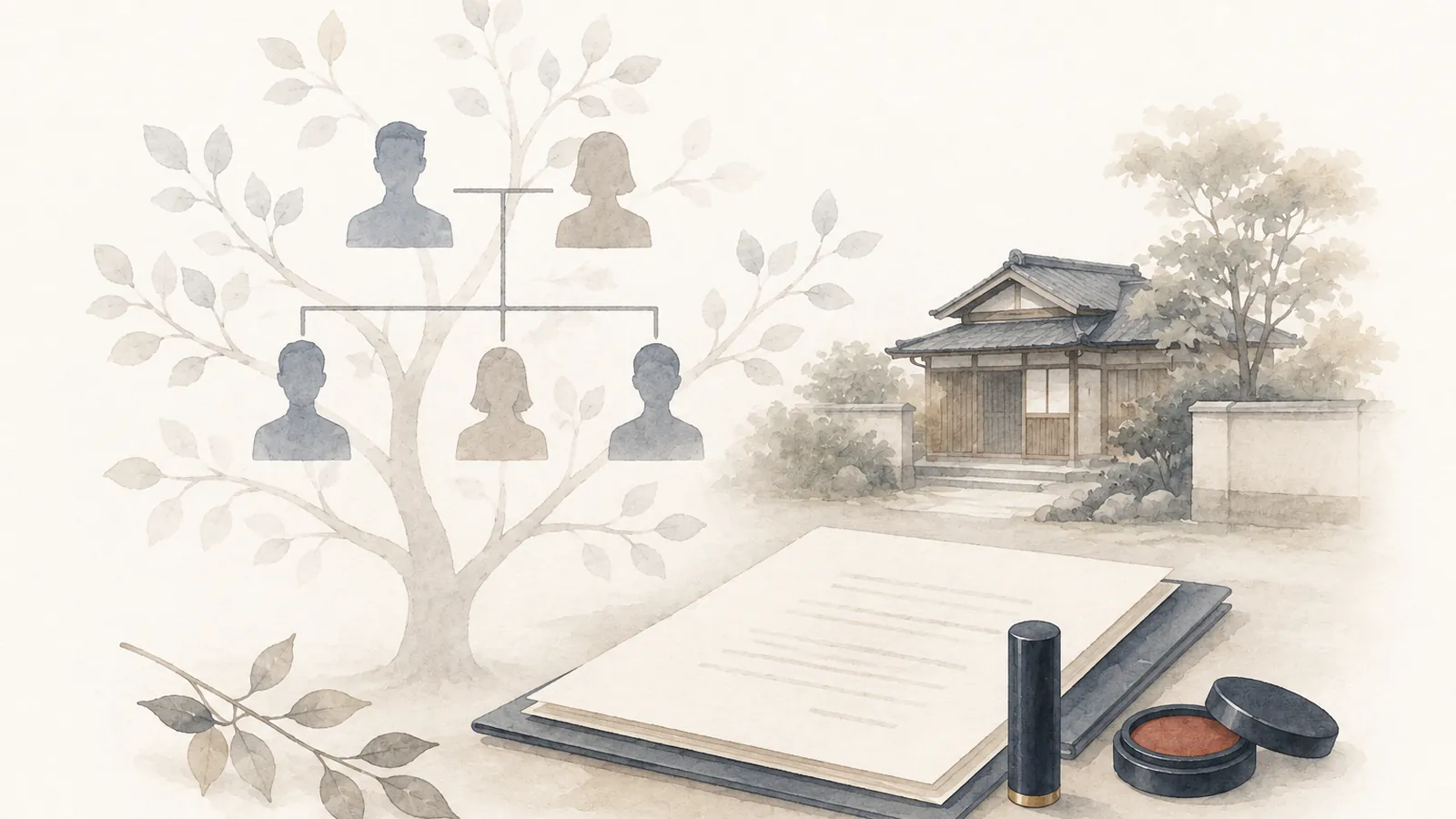

Closing a grave (relocation of remains) is a procedure carried out after obtaining an administrative permit. A person who intends to relocate must obtain the permit of the mayor of the place where the cremated remains currently exist (Article 5 of the Act on Graveyards and Burial). This article organises the flow and required documents of the relocation permit, the certificate of burial and the acceptance certificate, the relationship with the person who succeeds to the ritual property under Article 897 of the Civil Code, the discussion of the temple-leaving fee and removal costs, and who to ask for document preparation, negotiation and disputes (separate engagement).
In short: closing a grave (relocation of remains) is a procedure carried out after obtaining an administrative permit. "Relocation of remains" means moving a buried body to another grave, or moving buried or stored cremated remains to another grave or ossuary (Article 2, paragraph 3 of the Act on Graveyards, Burial, etc. (Act No. 48 of 1948)), and a person who intends to relocate must obtain the permit of the mayor of the municipality (including the head of a special ward; the same below) of the place where the cremated remains, etc. currently exist (Article 5, paragraphs 1 and 2 of the same Act). In practice, you gather from the manager of the current grave a document certifying the fact of burial or storage (a certificate of burial or storage), and from the destination a document showing acceptance (an acceptance certificate), then file a relocation permit application with the municipality where the current graveyard is located and receive a relocation permit (Appended Form No. 3 of the same Act's Enforcement Regulations (Ordinance of the Ministry of Health and Welfare No. 24 of 1948)). Who succeeds to the ritual property (genealogical records, ritual implements and graves) is a matter of Article 897 of the Civil Code, and the temple-leaving fee and the cost of removing the grave are a matter of discussion with the temple or graveyard. This article organises the flow and required documents of the relocation permit, and who to ask for what. The relocation permit is granted by the mayor, and our office does not guarantee the permit. Document preparation and negotiation or disputes are each contracted separately as an independent business.
Where and what do you file for the relocation permit?
The authority for the relocation permit, unlike burial and cremation, is the mayor of the place where the body or cremated remains currently exist (Article 5, paragraph 2 of the Act on Graveyards, Burial, etc.). In other words, you apply to the municipality where the grave currently is, not to the destination municipality. The items to be entered in the application are set in Article 2, paragraph 1 of the Enforcement Regulations of the same Act.
| Items in the relocation permit application (Enforcement Regulations Article 2, paragraph 1) | Content |
|---|---|
| Item 1 | The registered domicile, address, name and sex of the deceased |
| Item 2 | The date of death |
| Item 3 | The place of burial or cremation |
| Item 4 | The date of burial or cremation |
| Item 5 | The reason for relocation |
| Item 6 | The place of relocation (the destination) |
| Item 7 | The address and name of the applicant, the relationship to the deceased, etc. |
For old burials, the date of death or of burial may be unknown. In that case, many municipalities allow you to write "unknown", and the forms and method of entry differ by municipality. When there are several sets of remains to relocate, you apply, in principle, for each one (some municipalities have a form on which several may be entered on one application). Once permitted, a relocation permit (Appended Form No. 3 of the Enforcement Regulations) is issued; you submit it to the manager of the destination graveyard or ossuary and inter the remains.
Where do you obtain the certificate of burial and the acceptance certificate?
To the relocation permit application you attach a document certifying the fact of burial or storage. Article 2, paragraph 2 of the Enforcement Regulations requires attaching a "document, prepared by the manager of the graveyard or ossuary, certifying the fact of burial or interment or storage". The practical way to gather the documents is as follows.
| Document | Where to obtain it | Position |
|---|---|---|
| Certificate of burial / interment / storage | The manager of the current graveyard or ossuary (temple, cemetery park, municipality) | The attached document required by Enforcement Regulations Article 2, paragraph 2 |
| Acceptance certificate (perpetual-use permit, grave-use permit, etc.) | The destination graveyard or ossuary | Many municipalities require it at application (by practice) |
| Relocation permit application | The municipality where the current graveyard is located | The entry items under Article 2, paragraph 1 of the same Regulations |
When someone other than the grave user applies, a consent form of the grave user, or a copy of a judgment with a certificate of finality, etc. showing that the applicant has the right to seek relocation, is required (Enforcement Regulations Article 2, paragraph 2). Because the need for, and form of, the acceptance certificate differ by municipality and temple, confirming the required documents in advance with the three parties—the manager of the current graveyard, the destination and the municipality—prevents being sent back. Within the scope of administrative-scrivener work, an administrative scrivener supports the preparation of the relocation permit application and other documents, but the certificates are issued by each manager and the municipality.
Can you not close a grave if the ritual successor has not been decided?
A grave is treated separately from ordinary inheritance property such as deposits and real estate. The ownership of genealogical records, ritual implements and graves is succeeded to by the person who, in accordance with custom, should preside over the ancestral rites; if the decedent (the deceased) has designated someone, that person succeeds (Article 897, paragraph 1 of the Civil Code). When the custom is unclear, the family court decides (paragraph 2 of the same Article). Accordingly, organising "who succeeds to the rites and is the grave user" is the starting point for closing a grave.
If the current grave user is the applicant, the procedure is easier to proceed with; otherwise, a consent form of the user, etc. is needed (the aforementioned Enforcement Regulations Article 2, paragraph 2). Situations with a dispute over rights and obligations—relatives disagreeing over who the ritual successor is, or failing to agree with the temple on the conditions of succession or leaving—are the field of an attorney. Our office supports, as an independent business, the preparation of documents and the organisation of the procedure on the premise that there is no dispute. The relationship between succession to ritual property and the division of the estate is organised in The relationship between succession to rites, graves and Buddhist altars and the division of the estate. For the entrance to the whole of inheritance procedures, see the inheritance-specialist site of a separate business, Inheritance Desk.
Who do you discuss the temple-leaving fee and the cost of removing the grave with?
Closing a grave involves, apart from the administrative-procedure costs, costs discussed between the parties. These are not requirements for the administrative permit but a matter of contract and negotiation with the temple, graveyard and stonemason.
| Cost / procedure | Counterparty | Position |
|---|---|---|
| Fee for the relocation permit application | The municipality | Many municipalities are free or a few hundred yen (differs by municipality) |
| Temple-leaving fee | The temple (if you cease to be a parishioner) | A voluntary nature with no legal provision; the amount is by discussion between the parties |
| Cost of removing the gravestone and levelling the ground | The stonemason | A private contract for work |
| Offering for the eye-closing service (soul removal), etc. | The temple | A matter of custom and religion |
Have a question about your situation?
Tell us about your residency, permit or administrative procedure enquiry.
There is no legal provision for a temple-leaving fee, and the amount and whether there is an obligation to pay are by discussion with the temple. Negotiation and legal judgement where the amount or conditions cannot be agreed and a dispute arises are the field of an attorney and are not our office's work. Ritual property such as grave sites, graves and ritual implements is treated as property exempt from inheritance tax (Article 12, paragraph 1, item 2 of the Inheritance Tax Act), and closing a grave itself does not usually give rise to inheritance tax or income tax; however, individual tax judgement is the field of a tax accountant. Our office does not give tax consultation or calculate tax.
Who should you divide document preparation, negotiation and disputes between?
Closing a grave mixes work of different natures—administrative procedure, negotiation between the parties and agreement among relatives. The roles are divided as follows.
- Preparation of the relocation permit application and other documents, and organisation of required documents → Yotsuba Administrative Scrivener Office (administrative scrivener)
- Issuance of the certificate of burial or storage and the relocation permit → the manager of the current graveyard and the municipality
- Discussion of the conditions of the temple-leaving fee, grave removal and services → the party (the applicant) and the temple, graveyard and stonemason
- Negotiation and legal judgement where there is a dispute over rights and obligations regarding ritual succession or leaving the temple → an attorney
- Registration of real estate among the changes of title of inheritance property → a judicial scrivener
- Individual tax judgement such as inheritance tax and income tax → a tax accountant
Yotsuba Administrative Scrivener Office and Yotsuba Real Estate Co., Ltd. are separate businesses. Our office handles only the preparation and organisation of documents for the relocation permit application as an independent business; certificates are issued by each manager and the municipality, the temple-leaving-fee negotiation is with the party and the temple, disputed situations are with an attorney, registration with a judicial scrivener, and tax with a tax accountant, each contracted separately. Our office receives no referral fee. For the whole picture of work you can ask an administrative scrivener, see Licensing Services; for the flow of engagement, see Engagement Flow; and for fees, see Fee Schedule.
FAQ
Q. Which government office do you file the relocation permit with?
A. You file with the mayor of the place where the cremated remains, etc. currently exist (= the municipality where the current grave is) (Article 5, paragraph 2 of the Act on Graveyards, Burial, etc.), not the destination municipality. The application items are set in Article 2, paragraph 1 of the same Act's Enforcement Regulations, and you attach a document (prepared by the manager) certifying the fact of burial or storage. An administrative scrivener supports the document preparation as an independent business.
Q. It is a burial from decades ago and I do not know the date of death. Can I apply?
A. When the date of death or of burial is unknown, many municipalities allow you to write "unknown", but the forms and method of entry differ by municipality. First confirm the required documents and the method of entry with the manager of the current graveyard and the relevant municipality.
Q. The temple has demanded a large temple-leaving fee. Can I ask an administrative scrivener to negotiate?
A. There is no legal provision for a temple-leaving fee, and the amount and whether there is an obligation to pay are by discussion with the temple. Negotiation and legal judgement where the amount or conditions cannot be agreed and a dispute arises are the field of an attorney, not the work of an administrative scrivener. Our office supports, as a separate business, the preparation of documents and the organisation of the procedure on the premise that there is no dispute.
Q. Does closing a grave incur tax?
A. Ritual property such as grave sites, graves and ritual implements is treated as property exempt from inheritance tax (Article 12, paragraph 1, item 2 of the Inheritance Tax Act), and closing a grave itself does not usually give rise to inheritance tax or income tax. However, individual tax judgement is the field of a tax accountant, and our office does not give tax consultation or calculate tax.
Sources (Primary Information)
- e-Gov Law Search / Ministry of Health, Labour and Welfare, "Act on Graveyards, Burial, etc." (Act No. 48 of 1948), Article 2, paragraph 3 (definition of relocation), Article 5, paragraph 1 (permit for relocation) and Article 5, paragraph 2 (the permitting authority = the mayor of the place where the remains currently exist) (accessed 2026-09-26)
- e-Gov Law Search / Ministry of Health, Labour and Welfare, "Enforcement Regulations of the Act on Graveyards, Burial, etc." (Ordinance of the Ministry of Health and Welfare No. 24 of 1948), Article 2, paragraph 1 (items of the relocation permit application), Article 2, paragraph 2 (attached documents such as a document certifying the fact of burial or storage) and Article 4 (the relocation permit is by Appended Form No. 3) (accessed 2026-09-26)
- e-Gov Law Search, "Civil Code", Article 897 (succession to rights concerning rites) (accessed 2026-09-26)
- e-Gov Law Search, "Inheritance Tax Act", Article 12, paragraph 1, item 2 (exemption of grave sites, mausoleums, ritual implements and things equivalent thereto) (accessed 2026-09-26)
- The relocation-permit application guides of each municipality (fees, forms and the need for an acceptance certificate differ by municipality) (accessed 2026-09-26)
This article is general information and does not guarantee individual eligibility for the relocation permit, the required documents, the need for an acceptance certificate, the fee, or the attribution of ritual succession. The relocation permit is granted by the mayor of the place where the cremated remains, etc. currently exist (including the head of a special ward). Confirm the forms, method of entry, attached documents and fees on the relevant municipality's official page. Issuance of the certificate of burial or storage is by the manager of the current graveyard; the conditions of the temple-leaving fee, removal and services are between the party and the temple, graveyard and stonemason; negotiation and legal judgement where there is a dispute over rights and obligations regarding ritual succession or leaving the temple are by an attorney; registration of real estate by a judicial scrivener; and individual tax judgement such as inheritance tax and income tax by a tax accountant, each as an independent business under a separate contract. Our office receives no referral fee. Individual judgements are made by a qualified professional after a meeting. Written by Joji Uramatsu, administrative scrivener and licensed real estate broker.
Let's start by sorting out your situation.
Yotsuba Gyoseishoshi Office (Kohinata, Bunkyo-ku; a 5-minute walk from Myogadani Station on the Tokyo Metro Marunouchi Line) supports you from organizing the requirements through document preparation and application.
LINE connects you directly to our representative, Joji Uramatsu. Messages are accepted 24/7 and answered in order.
5 min walk from Myogadani Sta. (Tokyo Metro Marunouchi Line)|Tue & Wed 10:00–19:00 / Mon, Thu–Sun 18:00–19:00