



Building a wooden rental apartment building in Tokyo: is three storeys possible, and how much is the Tokyo subsidy?
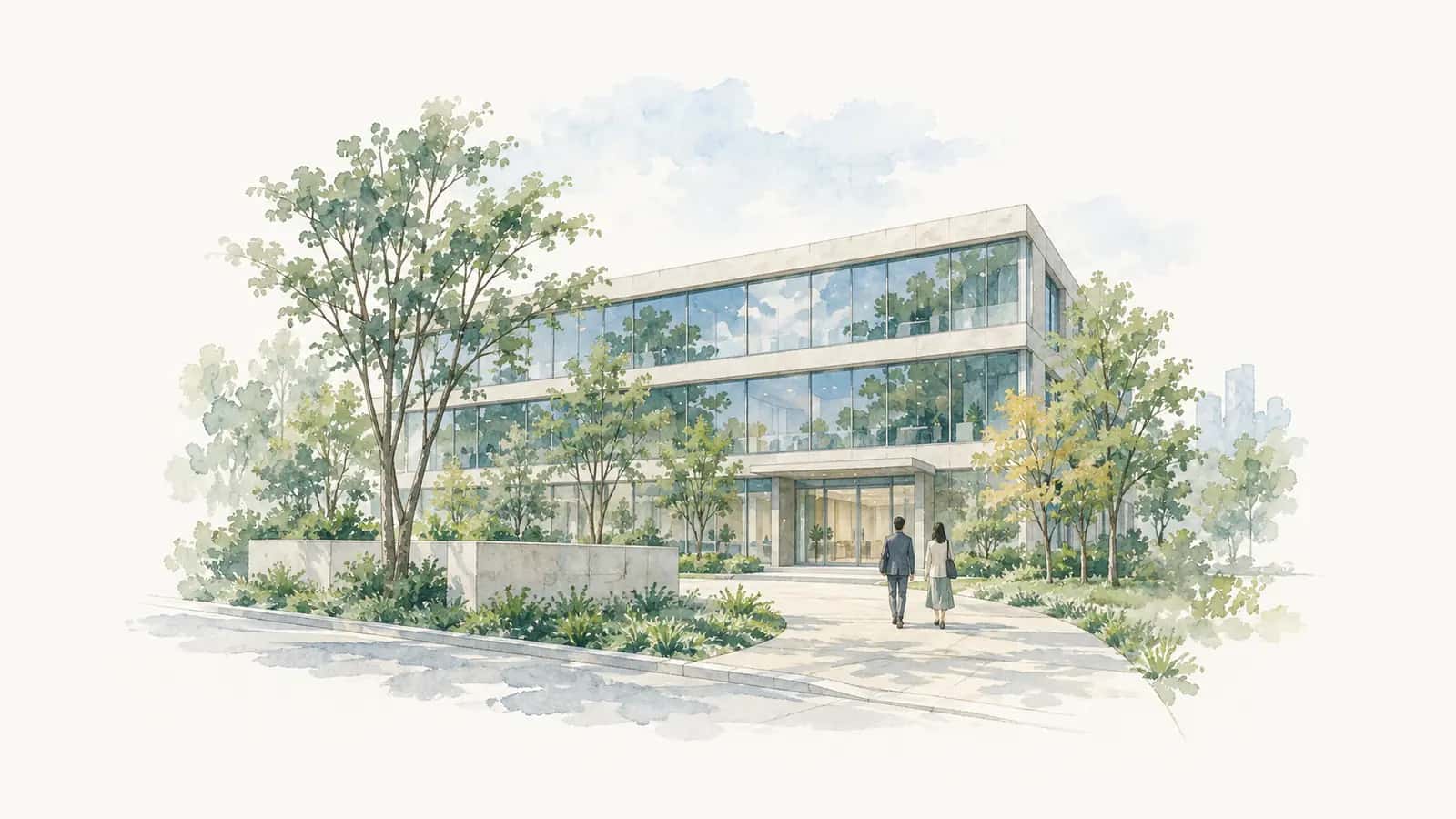

A rental apartment building can be built in timber up to three storeys in Japan. Tokyo subsidises newly built zero-emission homes (Tokyo Zero-Emission House) at up to 2 million yen per unit for apartment buildings — around 20 million yen for a ten-unit building. Written for landowners and investors considering land utilisation and rental management in Tokyo, this article covers the feasibility of timber construction, how it compares with reinforced concrete, the amounts and conditions of the Tokyo subsidy, and impressions from visiting a three-storey wooden rental building. Consultation is free of charge.
In short: a rental apartment building can be built in timber up to three storeys. Tokyo subsidises newly built zero-emission homes at up to 2 million yen per unit for apartment buildings — around 20 million yen for a ten-unit building. This article is for landowners and investors considering land utilisation and rental management in Tokyo: the structural options, the Tokyo subsidy, and impressions from visiting a three-storey wooden rental building.
Can a three-storey rental apartment building be built in timber?
Yes. A three-storey wooden apartment building (known in Japan as moku-san-kyo) can be built without being a fire-resistant building, provided it meets certain standards — principal structural parts of one-hour quasi-fire-resistant construction, a balcony usable for evacuation for each unit, and so on. In addition, the 2018 amendment to the Building Standards Act (Act No. 67 of 2018, in force 25 June 2019) widened the range of three-storey buildings under 200 square metres of total floor area that need not be fire-resistant buildings, and Japan's major housebuilders are productising mid-rise timber construction.
Which standard applies depends on the site's fire-prevention zoning (fire zone or quasi-fire zone) and the building's size. The reliable approach is to confirm with a designer at the land-selection stage.
How does timber compare with reinforced concrete?
| Item | Timber | Reinforced concrete (RC) |
|---|---|---|
| Construction cost | Comparatively easier to contain | Comparatively higher |
| Construction period | Easier to shorten | Tends to run longer |
| Statutory useful life (residential) | 22 years | 47 years |
| Sound insulation | Structure alone tends to be weaker; compensated by floor and wall specifications | Generally considered stronger |
A shorter statutory useful life (National Tax Agency useful-life table) means larger annual depreciation charges. How that plays into loan terms and tax treatment depends on the property and the financing, so we point you to a licensed tax accountant (zeirishi) for the specifics, under a direct engagement.
How much can be claimed under the Tokyo subsidy?
Under the Tokyo Zero-Emission House promotion programme for fiscal 2026 (Reiwa 8), newly built homes certified to the insulation and energy-saving standards set by the Tokyo Metropolitan Government receive a construction subsidy (Cool Net Tokyo website, viewed 15 August 2026; applications open).
| Grade | Apartment buildings | Detached houses |
|---|---|---|
| Grade A | ¥2,000,000 per unit | ¥2,400,000 per unit |
| Grade B | ¥1,300,000 per unit | ¥1,600,000 per unit |
| Grade C | ¥300,000 per unit | ¥400,000 per unit |
The main conditions and framework are as follows.
| Item | Details |
|---|---|
| Eligible | Newly built homes in Tokyo (detached and apartment buildings), with total floor area under 2,000 m² |
| Condition for apartment buildings | Every unit must reach Grade C or higher; each unit is certified and subsidised at its own grade |
| Applicant | The building owner commissioning the construction (individual or business) |
| Application period (FY2026) | 1 April 2026 to 31 March 2027; electronic filing as a rule |
| Precondition | Design confirmation and certification by a certification body registered with the Tokyo Metropolitan Government |
There are further subsidies for installing solar power equipment (¥120,000–130,000 per kW up to 3.6 kW) and storage batteries (¥100,000 per kWh, capped at ¥1,200,000 per unit), and a reduction of real estate acquisition tax — up to the full amount — where certain conditions are met. Note that for storage batteries, where the design-confirmation review is applied for on or after 1 October 2026, only battery systems on SII's registered product list for FY2026 qualify (projects that completed the design-confirmation application by 30 September 2026 are excluded from the change).
Budgets and conditions change by fiscal year and over time; nothing here promises any amount or approval. Always check the latest conditions on the official pages.
Preparing the application documents is the work of an administrative scrivener (gyosei-shoshi — the Japanese qualification for preparing documents submitted to public authorities). Yotsuba Administrative Scrivener Office, an independent business from our company, takes this on under a separate contract (subsidy application support).
What was the actual three-storey wooden rental building like?
In August 2026 we visited a three-storey, ten-unit wooden rental building in Kamata, Ota-ku, built by Misawa Homes.
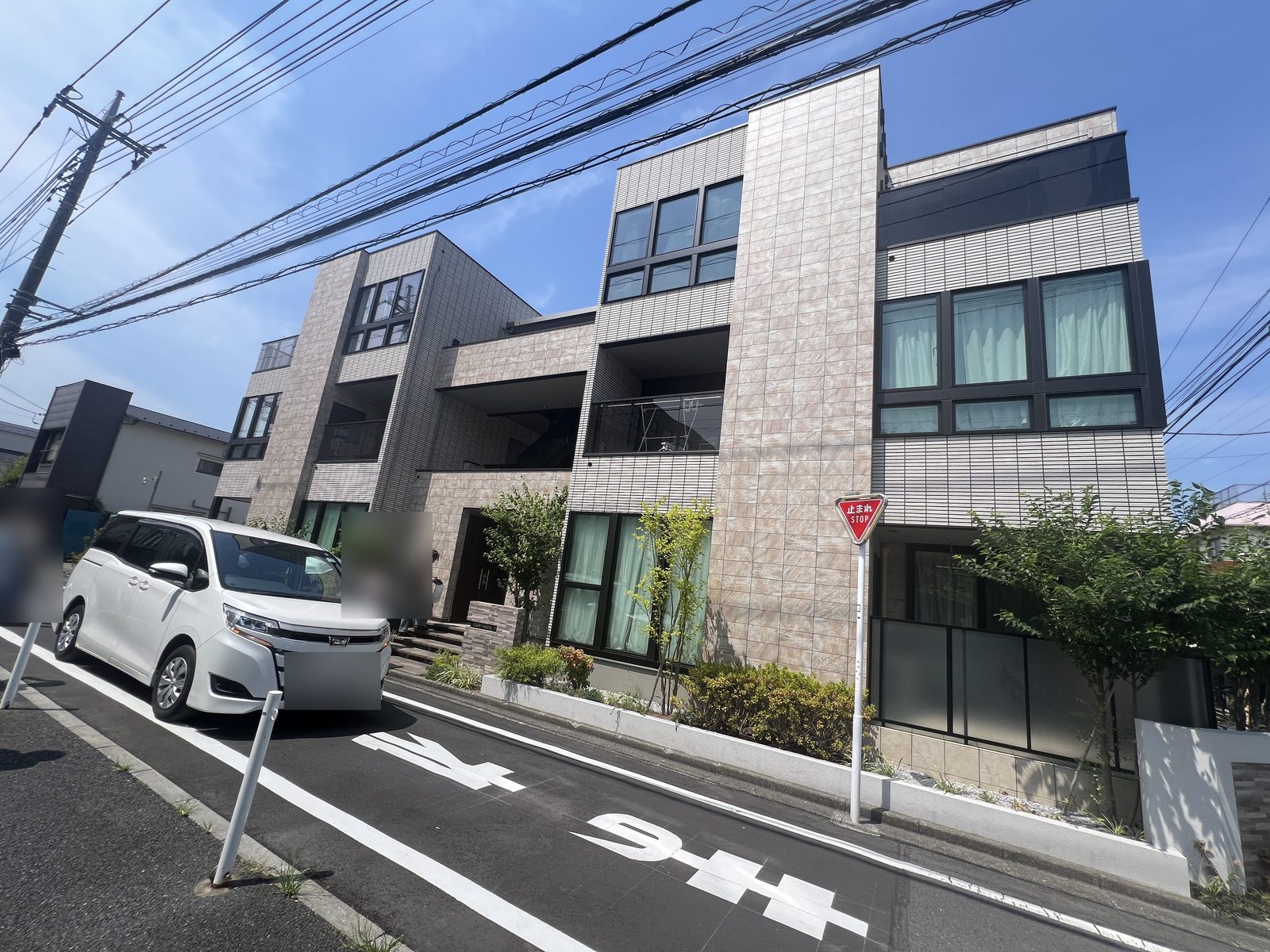
The honest impression: rental housing built to the standard of a custom detached home. The walls are thick, and you can see on a visit that materials have been used properly inside the frame — in places tenants never see. It overturned the assumption that rental housing is always built down to a cost.
According to the explanation given on the visit, the building received a subsidy of roughly 20 million yen. Grade A (¥2,000,000 per unit) times ten units matches that figure. In other words, even in timber, raising the insulation and energy-saving grade and obtaining certification can, depending on scale, bring subsidies in the tens of millions of yen.
Have a question about your situation?
Tell us about your property search or plans to sell.
Who should I consult?
Different questions go to different specialists. For land selection and reading rental demand, consult us (Yotsuba Real Estate Co., Ltd.). Design, construction and grade certification sit with housebuilders, contractors and the certification bodies; support with the subsidy application sits with Yotsuba Administrative Scrivener Office (an independent business from our company, engaged under a separate contract); depreciation and other tax questions are for a licensed tax accountant. We point you to each for a direct engagement, and we receive no introduction fees.
For our approach to investment and business-use property, see Investment and business-use real estate; for how to read land values, see Floor-area ratio and land value (Japanese).
Frequently asked questions
Q. How many storeys can a wooden rental apartment building have?
A. Up to three storeys can be built without being a fire-resistant building where the moku-san-kyo standards are met — one-hour quasi-fire-resistant principal structure, evacuation-usable balconies and so on. Above that, or inside a fire zone, the required performance changes. The answer turns on the site's fire-prevention zoning and the building's size, so confirm with a designer and the local building authority at the land-selection stage.
Q. Can I apply for the Tokyo Zero-Emission House subsidy if my purpose is rental management?
A. The applicant is the building owner commissioning the new home (individual or business), and apartment buildings are within scope. Conditions include every unit reaching Grade C or higher and total floor area under 2,000 m². Check eligibility for your project and the latest conditions on the Cool Net Tokyo official pages and the programme guidelines.
Q. Isn't a 22-year statutory useful life a disadvantage for timber?
A. Not necessarily. A shorter useful life means larger annual depreciation charges, and it also bears on loan terms and the timing of an eventual sale. It can work either way, so take it to a licensed tax accountant with your specific project and financing, under a direct engagement.
Q. Can I discuss everything from finding land through to the subsidy application?
A. We can be your first point of consultation, but the contracts are separate by field: land selection and rental demand with Yotsuba Real Estate Co., Ltd.; subsidy application support with Yotsuba Administrative Scrivener Office (independent businesses under separate contracts); design and certification with the housebuilder and certification body; tax with a licensed tax accountant. We set out the overall sequence at the first consultation. Consultation is free of charge.
Sources (primary)
- Cool Net Tokyo, "FY2026 (Reiwa 8) Tokyo Zero-Emission House promotion programme" (subsidy amounts, conditions, application period, change to battery requirements; viewed 15 August 2026)
- Tokyo Metropolitan Government Bureau of Taxation, reduction of real estate acquisition tax for newly built Tokyo Zero-Emission Houses (viewed 15 August 2026)
- Building Standards Act on e-Gov (Act No. 201 of 1950; Article 27 = fire-resistance requirements, as amended by Act No. 67 of 2018, in force 25 June 2019)
- Ministerial Ordinance on Useful Lives of Depreciable Assets on e-Gov (Ministry of Finance Ordinance No. 15 of 1965), Appended Table 1, and the National Tax Agency useful-life table (timber residential 22 years / reinforced concrete residential 47 years; viewed 15 August 2026)
Subsidy budgets and conditions change by fiscal year and over time. This article provides general information only and does not guarantee any individual building plan, subsidy application or tax judgement.
Brokerage and sale or lease contracts for land and buildings are handled by Yotsuba Real Estate Co., Ltd. (licensed real estate brokerage); preparation of documents for submission to public authorities, including subsidy applications, is handled by Yotsuba Administrative Scrivener Office — each as an independent business under a separate contract. Design and building confirmation are for architects; tax is for licensed tax accountants. We receive no introduction fees.
About the author
Joji Uramatsu — Real Estate Transaction Specialist (Tokyo Governor registration No. 293544) and Administrative Scrivener (registration No. 25087022). Representative Director of Yotsuba Real Estate Co., Ltd. (real estate brokerage licence: Tokyo Governor (1) No. 113304) and head of Yotsuba Administrative Scrivener Office. Former journalist and China Bureau Chief at the Mainichi Shimbun. Kohinata, Bunkyo-ku, Tokyo — about five minutes on foot from Myogadani Station. He works through the land-use (real estate) and application-document (administrative) issues at one table, and points you to partner professionals for design and tax.
Related Articles
- 2026.09.07Inheritance
You inherited a rental property that is under a sublease (master lease) — how the contract and the rent carry over
- 2026.08.10Investment & Commercial Real Estate
Why Japanese Land Value Depends on Floor Area Ratio — And Why Nearby Sale Prices Cannot Be Applied Directly
- 2026.09.27Business property
Choosing premises for a veterinary clinic — the Veterinary Care Act's facility and structural requirements
Feel free to reach out for a consultation
Questions about our column articles are also welcome.
It's fine to start with just one line: “What should I do with this?”
Our representative replies to you personally, and if a property matches your needs, we will introduce it via LINE.
LINE connects you directly to our representative, Joji Uramatsu. Messages are accepted 24/7 and answered in order.
5 min walk from Myogadani Sta. (Tokyo Metro Marunouchi Line)|10:00–18:00 (Closed Tue & Wed)