



Can the inherited-vacant-house ¥30 million special deduction be used even for a family home where the decedent had moved into an elderly-care facility?
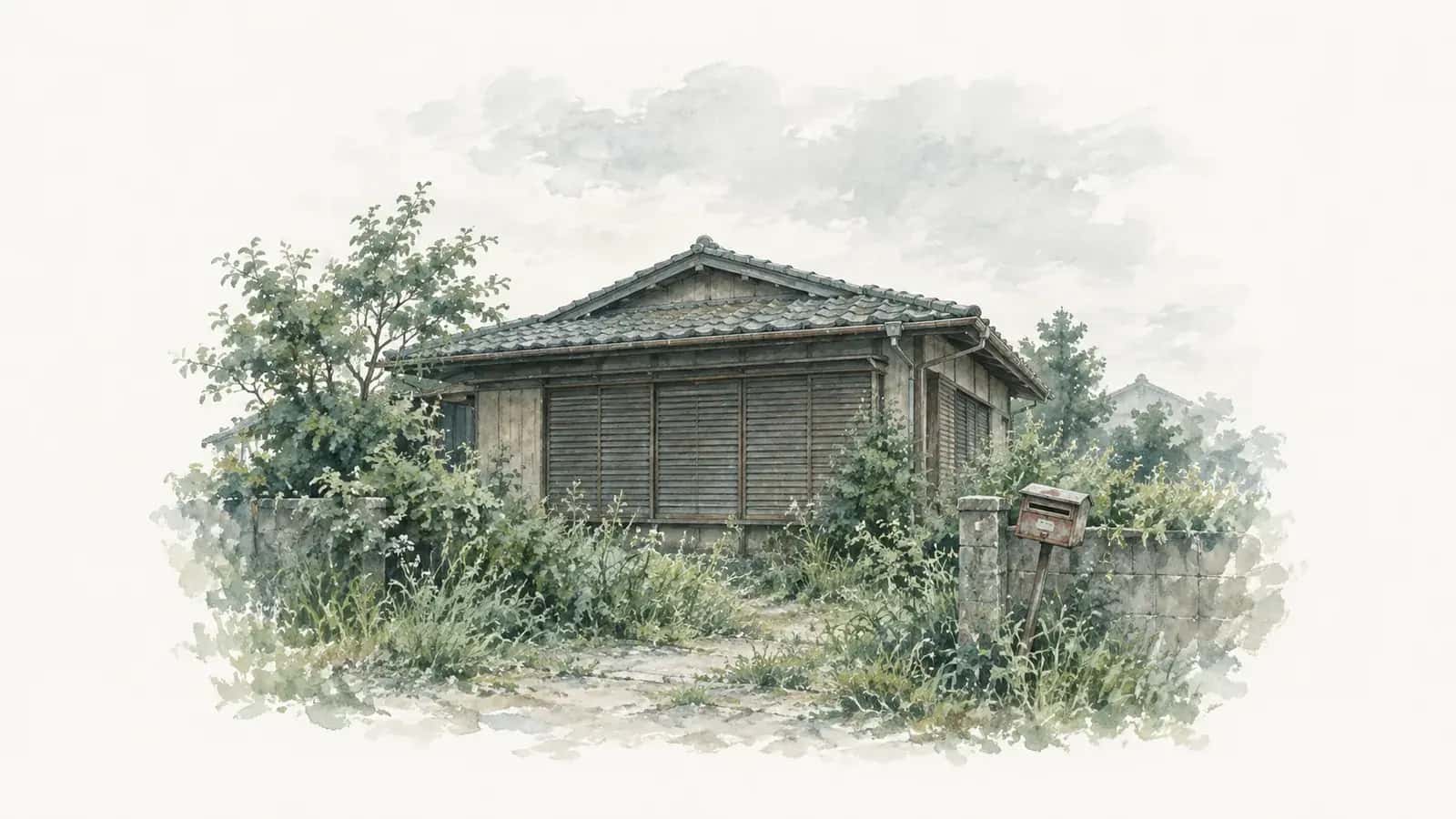

Even a family home that became vacant after a parent moved into an elderly-care facility may still qualify for the inherited-vacant-house ¥30 million special deduction. The keys are proving that long-term-care certification etc. had been received just before entry, that the vacant house was not rented out but maintained from entry until the inheritance began, and that the decedent lived alone. The final applicability judgment and tax return go to a tax accountant, the sale to us, and inheritance registration to a judicial scrivener.
In short: Even a family home that became vacant after a parent moved into an elderly-care facility may still qualify for the inherited-vacant-house ¥30 million special deduction. The keys are proving that long-term-care certification etc. had been received just before entry, that the vacant house was not rented out etc. but maintained from entry until the inheritance began, and that the decedent lived alone. The final applicability judgment and tax return go to a tax accountant, the sale to us, and inheritance registration to a judicial scrivener.
This article is for those who inherited a family home that became vacant after a parent entered a facility and are considering a sale; it organises, from the Act on Special Measures Concerning Taxation and National Tax Agency Tax Answers, whether the vacant-house exemption can be used in the "became vacant after moving into an elderly-care facility" case. What we handle is the valuation, building the sale schedule, and the brokerage of the sale. The final applicability judgment and the tax return go to a tax accountant, inheritance registration to a judicial scrivener, and a disputed estate division to a lawyer; these are independent entities from Yotsuba Real Estate Co., Ltd. (四葉不動産株式会社), engaged separately for each service under a separation-of-engagement arrangement. For working back from the timing of sale and comparing ways to sell, see should you sell or keep an inherited family home; for the mandatory nature of inheritance registration and the order of selling, see inheritance registration becoming mandatory and selling.
What is the "decedent's residence requirement" of the inherited-vacant-house ¥30 million special deduction?
The inherited-vacant-house ¥30 million special deduction is a measure that lets an heir, when selling "a house in which the decedent lived alone just before the inheritance began," deduct up to ¥30 million (in certain cases ¥20 million) from the capital gain (Act on Special Measures Concerning Taxation Art. 35). One of the keys is this "residence requirement."
As conditions on the house side, it must have been built on or before 31 May 1981 (old earthquake standard), must not be a building registered under sectional ownership, and just before the inheritance began there must have been no resident other than the decedent (living alone) (NTA Tax Answer No. 3306). Further, it must not have been used for business, letting or residence from the time of inheritance until the time of sale. In other words, if it is rented out or someone lives there after the inheritance, it is in principle excluded. The deduction falls to a maximum of ¥20 million where, for a transfer on or after 1 January 2024, three or more heirs acquired the decedent's residential house, etc.
| Category | Example requirement |
|---|---|
| Year built | Built on or before 31 May 1981 |
| Type of building | Not registered under sectional ownership (a detached house, etc.) |
| Residence status | No resident other than the decedent just before the inheritance began |
| Use after inheritance | Not used for business, letting or residence |
| Deduction amount | Up to ¥30 million (¥20 million if three or more acquiring heirs for a transfer from 2024) |
Individual applicability is confirmed by a tax accountant against the NTA page and the statute.
Does a family home where the decedent had entered an elderly-care facility qualify, and from which amendment did it change?
There is room for it to qualify. Originally this measure presupposed "a house in which the decedent lived just before the inheritance began," but the FY2019 (Reiwa 1) amendment extended the scope to cover the case where the decedent had entered an elderly-care facility and the house had become vacant, treating the residence requirement as met if certain conditions are satisfied. It applies to transfers on or after 1 April 2019.
The requirements organised by NTA Tax Answer No. 3307 are as follows. (1) Just before the inheritance began, the decedent — who had received long-term-care certification, support-required certification, etc. — had entered/was residing in an elderly nursing home, a special nursing home for the elderly, a fee-charging home for the elderly, a serviced housing for the elderly, a long-term-care health facility, a dwelling for dementia-type communal daily-life care, etc. (the presence of certification is judged at the point just before the house ceased to be used as a residence). (2) From the time it ceased to be a residence until just before the inheritance began, the house continued to be used for storing the decedent's belongings, etc., and was not used for business, letting or residence by anyone other than the decedent. (3) From entry until just before the inheritance began, the house the decedent is recognised to have mainly resided in is that elderly-care facility. The basis is Act on Special Measures Concerning Taxation Art. 35, Enforcement Order Arts. 20-3 and 23, Enforcement Regulation Art. 18-2, and Circular 35-9-2.
| Point | Content |
|---|---|
| Amendment | FY2019 (Reiwa 1) amendment |
| Application start | Transfers on or after 1 April 2019 |
| Timing of the certification test | Just before the house ceased to be a residence |
| Example facilities | Elderly nursing / special nursing / fee-charging homes, serviced housing for the elderly, long-term-care health facilities, etc. |
Moving in for care to a child's home, etc. — a move to somewhere other than an elderly-care facility — is in principle excluded. The final applicability judgment is made by a tax accountant.
By what documents do you prove the long-term-care certification, the fact of entry, and the maintenance of the vacant house?
You back it up with documents. You need materials showing that long-term-care certification etc. had been received, that the decedent had entered an elderly-care facility, and that the vacant house was maintained without being rented out etc. from entry until the inheritance began. In practice, you obtain the "confirmation of the decedent's residential house, etc." issued by the municipality where the property is located and attach it to the tax return.
Long-term-care certification and support-required certification are certifications under the Long-Term Care Insurance Act (Long-Term Care Insurance Act Art. 19), confirmed by the insured-person card or the certification-result notice. The fact of entry is shown by the entry contract with the facility and materials showing the period of entry, and the maintenance of the vacant house by electricity/water usage and management records. Which document proves what, and what the confirmation application requires, are confirmed by the municipality and a tax accountant. We help with guidance on the documents needed for the sale and the arrangement of preparation to fit the sale schedule.
| Fact to prove | Main documents | Confirm / issued by |
|---|---|---|
| Long-term-care certification, etc. | Long-term-care insurance insured-person card, certification-result notice | Municipality / tax accountant |
| Fact of entry | Facility entry contract, materials on the entry period | Facility / municipality |
| Maintenance of the vacant house (unused) | Electricity/water usage, management records | Heir / municipality |
| Confirmation of the whole measure | Confirmation of the decedent's residential house, etc. | Issued by the municipality (where the property is located) |
Does earthquake retrofitting or demolition let you use the measure, and until when is the sale deadline?
Because the house being sold is old-earthquake-standard (built on or before 31 May 1981), to sell it as is it was in principle necessary either to make it conform to the earthquake standard by the time of sale, or to demolish the house and sell as vacant land. For transfers on or after 1 January 2024, it has been relaxed so that the case may also qualify where, between the time of sale and 15 February of the year following the year of sale, it comes to conform to the earthquake standard or the whole of the house is demolished, etc. (NTA Tax Answer No. 3306). This created room for cases where the retrofit or demolition is done after handover, but because the specific application of who does it and when varies by case, a tax accountant confirms it.
The sale deadline is to sell by 31 December of the year in which the day three years from the day the inheritance began falls. In addition, as the measure's overall application period, transfers between 1 April 2016 and 31 December 2027 are covered. You must complete the sale by the earlier of these two deadlines.
| Item | Content |
|---|---|
| Retrofit or demolition | Being old-earthquake-standard, in principle earthquake conformity or demolition (vacant-land sale) is required |
| Relaxation from 2024 | Earthquake conformity / full demolition etc. by 15 February of the following year may also qualify |
| Sale deadline | By 31 December of the year in which the day three years from the start of inheritance falls |
| Application period of the measure | Transfers from 1 April 2016 to 31 December 2027 |
Have a question about your situation?
Tell us about your property search or plans to sell.
Which of retrofitting or demolition is more advantageous (cost, the fixed-asset tax after clearing to vacant land, the buyer segment) is organised by us as a comparison of ways to sell; the final tax determination is made by a tax accountant.
Who do you consult about the applicability judgment and the return, and who about the sale and inheritance registration?
You divide the roles. The applicability judgment and the tax return go to a tax accountant, the valuation and brokerage of the sale to us, inheritance registration to a judicial scrivener, and a disputed estate division to a lawyer. Because the vacant-house exemption has detailed requirements and cannot be applied if one is missed, it is safest to confirm the prospect of applicability with a tax accountant before selling, and to have us fit the sale schedule and the deadlines to it.
For consultations with us on the sale of inherited property, see inherited-property consultations. Where there are several heirs and the acquirer is undecided, the estate division and inheritance registration must be settled first, and we proceed bearing in mind that acquisition by three or more lowers the deduction to ¥20 million. Each specialist — Yotsuba Real Estate Co., Ltd. (四葉不動産株式会社), 四葉行政書士事務所, 四葉社会保険労務士事務所, and other specialists (tax accountant, judicial scrivener, lawyer) — is an independent entity, engaged separately for each service. We proceed by direct contract, direct invoice and direct payment; no referral or lead-transfer fees are exchanged. What we handle extends only to the valuation and brokerage; the applicability judgment and the return are made by a tax accountant.
| Where to consult | What they handle |
|---|---|
| Tax accountant | Applicability judgment of the vacant-house exemption, computation of the capital gain, tax return |
| Real estate company (us) | Valuation, sale schedule, brokerage of the sale, guidance on documents |
| Judicial scrivener | Inheritance registration, transfer-of-ownership registration on the sale |
| Lawyer | Mediation/adjudication where the estate division is disputed |
| Municipality | Issuance of the confirmation of the decedent's residential house, etc. |
Frequently asked questions
Q. Can the ¥30 million deduction be used even for a family home that became vacant after my parent entered a special nursing home for the elderly?
A. There is room for it. It requires that, just before the inheritance began, the decedent who had received long-term-care certification etc. had entered an elderly-care facility, that the vacant house was maintained without being rented out etc. from entry until the inheritance began, and that the decedent lived alone, among other requirements (NTA Tax Answer No. 3307; Act on Special Measures Concerning Taxation Art. 35, Enforcement Order Art. 23). The final applicability judgment is made by a tax accountant.
Q. What if my parent left the family home for care and lived together with me, the child, at my home?
A. A move to somewhere other than an elderly-care facility is in principle outside the scope of this residence-requirement special rule. What qualifies is the case where a decedent who had received long-term-care certification etc. had entered an elderly-care facility. Individual applicability is confirmed by a tax accountant against the NTA page and the statute.
Q. How do I prove that long-term-care certification was received and that the vacant house was maintained?
A. You show it with the long-term-care insurance insured-person card or the certification-result notice, the facility entry contract, electricity/water usage, etc., and obtain the "confirmation of the decedent's residential house, etc." issued by the municipality where the property is located to attach to the tax return. Confirm the required documents with the municipality and a tax accountant.
Q. By when must I sell to be in time?
A. The requirement is to sell by 31 December of the year in which the day three years from the day the inheritance began falls, and together with the measure's overall application period (transfers up to 31 December 2027) you must complete the sale by the earlier of them (NTA Tax Answer No. 3306). We build the sale schedule working back from the deadline, and the tax is confirmed by a tax accountant.
Primary sources
- NTA Tax Answer No. 3306, Special measure when selling the decedent's residential property (vacant house) / 国税庁タックスアンサー (Act on Special Measures Concerning Taxation Art. 35. Deduction up to ¥30 million (¥20 million for three or more acquiring heirs for transfers from 1 January 2024); transfers from 1 April 2016 to 31 December 2027 are covered; sell by 31 December of the year in which the day three years from the start of inheritance falls; built on or before 31 May 1981, not registered under sectional ownership, etc. From 2024, earthquake conformity / full demolition etc. by 15 February of the following year may also qualify. Law etc. as of 1 April 2026. Accessed 14 October 2026)
- NTA Tax Answer No. 3307, The decedent's residential house where the decedent had entered an elderly-care facility, etc. / 国税庁タックスアンサー (basis = Act on Special Measures Concerning Taxation Art. 35, Enforcement Order Arts. 20-3 and 23, Enforcement Regulation Art. 18-2, Circular 35-9-2. A decedent with long-term-care certification etc. had entered an elderly-care facility; the house was maintained for storage etc. from entry until the inheritance and not used for business, letting or another's residence; the main residence from entry onward is that facility, etc. Law etc. as of 1 April 2026. Accessed 14 October 2026)
- Act on Special Measures Concerning Taxation, Art. 35 (special deduction for capital gains on residential property) / 租税特別措置法 (paragraph 3 = the basis for the special deduction for capital gains on the decedent's residential property (vacant house). Accessed 14 October 2026)
- Long-Term Care Insurance Act, Art. 19 (long-term-care certification / support-required certification) / 介護保険法 (receiving the municipality's certification to receive care benefits / prevention benefits; the system underlying the long-term-care certification at the time of entry to an elderly-care facility. Accessed 14 October 2026)
Updated and additional sources checked on 14 October 2026. The provisions of the Act on Special Measures Concerning Taxation and the Long-Term Care Insurance Act were checked on e-Gov, and the measure's requirements in NTA Tax Answers No. 3306 and No. 3307. Whether a particular house meets the residence requirement (including the elderly-care-facility entry rule) or the post-inheritance non-use requirement, the specific application of who performs the earthquake conformity / demolition of the 2024 amendment and when, how the number of heirs is counted for the ¥20 million deduction, and the choice with the acquisition-cost add-on special measure vary by case and so are not asserted here but left as unverified; the applicability judgment and the return are confirmed by a tax accountant against original materials. The NTA page URL, content and reference date are as of the access date and may change by amendment or in structure. Publication remains held pending qualified review.
This article provides general information and does not present individual legal conclusions, tax conclusions, or the applicability of the measure. Confirmation by the competent authorities and qualified professionals is required. Yotsuba Real Estate Co., Ltd. (四葉不動産株式会社), 四葉行政書士事務所, 四葉社会保険労務士事務所 and other specialists (tax accountant, judicial scrivener, lawyer) are independent entities, engaged separately for each service. We proceed by direct contract, direct invoice and direct payment; no referral or lead-transfer fees are exchanged. The applicability judgment and the tax return of the vacant-house exemption lie with a tax accountant, inheritance registration with a judicial scrivener, and estate-division disputes with a lawyer. The initial property consultation is free; confirm each professional's scope and fees with that provider.
Author
Joji Uramatsu (浦松 丈二), real estate transaction specialist (Tokyo Governor registration No. 293544) and administrative scrivener (registration No. 25087022); representative director of Yotsuba Real Estate Co., Ltd. (四葉不動産株式会社; Real Estate Brokerage, Tokyo Governor (1) No. 113304) and representative of 四葉行政書士事務所. In Kohinata, Bunkyo-ku, Tokyo, about five minutes' walk from Myogadani Station. For a family home that became vacant after entry to an elderly-care facility, he handles the valuation, brokerage, and building of the sale schedule worked back from the deadline; the applicability judgment and return of the vacant-house exemption go to a tax accountant, inheritance registration to a judicial scrivener, and disputes to a lawyer. Author profile.
Related Articles
- 2026.08.27Inheritance
An inherited vacant house: demolish and sell as cleared land, or sell as land with an old house?
- 2026.09.27Inheritance
Raising inheritance-tax cash by selling inherited property — a schedule counted back from the 10-month deadline
- 2026.09.26Inheritance
Is it better to give up inherited land to the State treasury, or to sell it?
Feel free to reach out for a consultation
Questions about our column articles are also welcome.
Sell, rent out, or keep — start with a conversation before you decide.
An inherited family home, a property you own while living abroad, a tenanted building — send us a line on LINE about your situation. Our representative (a Licensed Real Estate Transaction Specialist) replies personally and lays out the outlook for selling, renting out, or keeping it. Appraisal and brokerage are handled solely by Yotsuba Real Estate Co., Ltd.
LINE connects you directly to our representative, Joji Uramatsu. Messages are accepted 24/7 and answered in order.
5 min walk from Myogadani Sta. (Tokyo Metro Marunouchi Line)|10:00–18:00 (Closed Tue & Wed)