



The inherited family home has an unregistered building. Can you still sell it? The route from the description registration
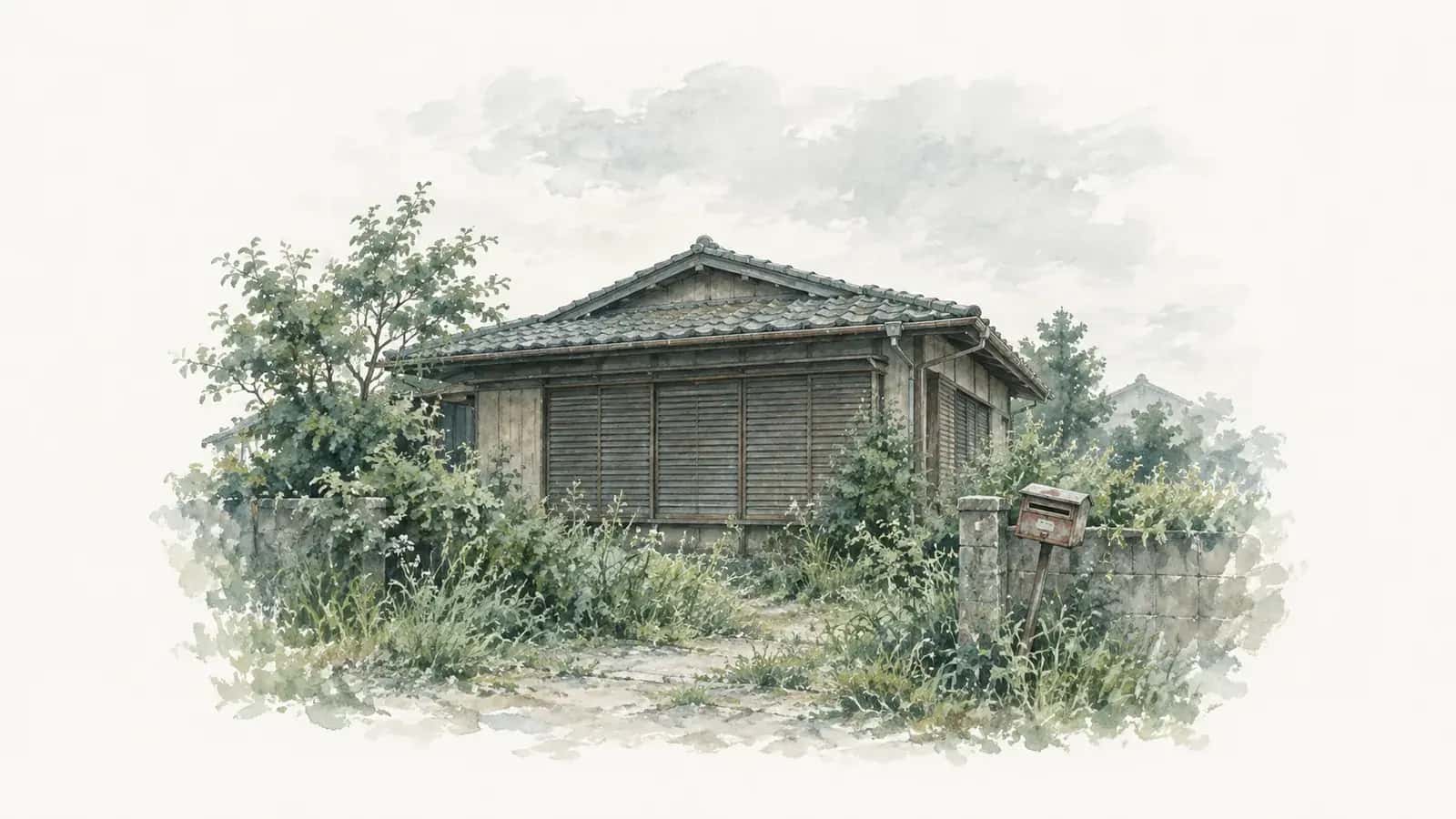

An inherited family home may include an unregistered building, and it can be sold — but buyers and banks usually require registration, so in practice you enter the "description registration" and the "preservation-of-ownership registration" before selling, then put it into the heir's name. The order is (1) a land and house investigator files the building description registration (Real Property Registration Act Art. 47), (2) a judicial scrivener files the preservation-of-ownership registration (Art. 74), (3) the registration into the inheritance. Paying fixed-asset tax while the building is unregistered is not unusual. A licensed real estate agent and administrative scrivener in Bunkyo, Tokyo explains.
In short: an inherited family home can include an unregistered building, and it can be sold as such. But because buyers and banks usually require registration, in practice you file the "description registration" and the "preservation-of-ownership registration" before selling, then put the title into the inheritance. The order is: (1) a land and house investigator files the building description registration (Real Property Registration Act, Article 47); (2) a judicial scrivener files the preservation-of-ownership registration (Article 74); (3) the registration into the heir's name. Paying fixed-asset tax while the building is unregistered is not unusual.
"My parent built the house but it was never registered." "Only the extension is unregistered." These come up often in inheritance. This article is for heirs who want to sell an inherited family home that includes an unregistered building (an unregistered house), seen from the standpoint of a real estate transaction — can you sell it as is, and what do you file, in what order. The building description registration is handled by a land and house investigator; the preservation-of-ownership and inheritance registrations by a judicial scrivener; disputes among heirs by an attorney; the capital-gains tax by a licensed tax accountant. We handle only the property investigation and the transaction, as an independent business entity you engage separately.
What is an unregistered building, and why is it a problem in inheritance?
An unregistered building is one not recorded in the registration record (the register). A building's registration has a "description section" and a "rights section". The description registration records the building's physical facts — location, type, structure, floor area and so on — first. When that description registration itself does not exist, the building is "unregistered".
Why does it happen? A new building is, in principle, under a duty to file the description registration. Article 47, paragraph 1 of the Real Property Registration Act (Act No. 123 of 2004) requires a person who has newly built a building, or acquired ownership of a building with no description registration, to file the description registration within one month of acquiring ownership. But old buildings put up with cash, without a mortgage, and extensions added to a main house, have sometimes stayed in use for decades without that filing. A loan makes the bank require registration to set a mortgage, so those get registered; buildings that never needed one tend to stay unregistered.
It becomes a problem in inheritance because without registration you cannot show on the register who inherited the building. The premise for a sale or a security interest is not in place, and buyers and banks hesitate. As the next section shows, the practice is to enter the registration and set things straight before selling.
Can it be sold unregistered, or is registration required?
In law, you can conclude a sale contract for an unregistered building; ownership passes even without registration. In practice, though, registration is entered before selling for the reasons below.
| Trying to sell it unregistered | Why it stalls |
|---|---|
| The transfer registration to the buyer cannot be done | Without a description and preservation-of-ownership registration, there is no premise for the transfer |
| The buyer cannot get a mortgage loan | Banks require a registered building to set a mortgage |
| The buyer cannot secure perfection | Without registration, ownership is hard to assert against third parties |
| The building's identity and facts cannot be shown | Area and structure cannot be confirmed on a public record |
Where the buyer uses a loan in particular, the bank will almost certainly require registration. So the seller enters the description and preservation-of-ownership registrations, puts the title into the inheritance, and then hands over. The realistic answer is not "can it be sold or not" but "enter the registration, then sell." The same theme — inheritance registration as a precondition for selling — is set out in this article on selling the family home under the mandatory inheritance registration.
Who files the description registration and the preservation-of-ownership registration (land and house investigator, judicial scrivener)?
Making an unregistered building sellable takes registration in two stages, and the professionals differ.
(1) Description registration (land and house investigator). First the building's physical facts are placed on the register. This is the description registration under Article 47 of the Real Property Registration Act, fixing the location, house number, type, structure and floor area. The building is measured, drawings (a building plan and floor plans for each storey) are prepared, and a document proving ownership is attached to the application. This measurement and drawing preparation, and the agency for registration of the description section, are the work of a land and house investigator.
(2) Preservation-of-ownership registration (judicial scrivener). Once the description section exists, the first owner is recorded in the rights section (section A). Article 74 of the Act limits who may file the preservation-of-ownership registration to the owner shown in the description section, that person's heir or other general successor, and so on. An heir who acquired the building by inheritance can file this preservation-of-ownership registration as the heir of the owner shown in the description section. The agency for registration of rights is the work of a judicial scrivener.
| Stage | What is done | Basis | Professional |
|---|---|---|---|
| (1) Description registration | Registers the building's facts (location, structure, floor area) | Real Property Registration Act Art. 47 | Land and house investigator |
| (2) Preservation-of-ownership registration | Records the first owner in the rights section | Real Property Registration Act Art. 74 | Judicial scrivener |
In practice, collecting the family register to identify the heirs and preparing an estate-division agreement come first. Registration is the exclusive work of a land and house investigator and a judicial scrivener, and we do not act as agent for it. We handle the property investigation (checking the cadastral map, the actual condition and the fixed-asset taxation information) and organising the run-up to the sale, and connect you with a land and house investigator and a judicial scrivener.
Why does a building stay unregistered while fixed-asset tax is being paid?
People often think "we pay fixed-asset tax every year, so it must be registered", but these are two different systems. Getting this wrong trips people up in inheritance.
Fixed-asset tax is levied on information the municipality itself gathers for taxation. Article 343, paragraph 1 of the Local Tax Act (Act No. 226 of 1950) sets the taxpayer as the owner of the fixed asset. And a municipality can tax even a house not recorded in the register, by entering it in a "supplementary house taxation ledger". Article 341 of the same Act lists the supplementary house taxation ledger as one of the fixed-asset taxation ledgers, and Article 381, paragraph 4 provides that a house other than one recorded in the register, on which fixed-asset tax may be levied, is entered in this supplementary house taxation ledger.
| Registration (Legal Affairs Bureau) | Fixed-asset tax (municipality) | |
|---|---|---|
| Purpose | Public notice of rights | Taxation |
| Unregistered house | No registration record at all | Entered in the supplementary house taxation ledger and taxed |
| Basis | Real Property Registration Act | Local Tax Act Art. 341, 343, 381 (4) |
In other words — the municipality grasps the house through a ledger separate from registration, so fixed-asset tax is levied even when it is unregistered. So "paying fixed-asset tax" does not mean "registered". When you inherit the family home, it is safer to check, against a certificate of registered matters, whether the houses listed on the tax statement are also on the register. A case where only the extension is unregistered surfaces here.
Have a question about your situation?
Tell us about your property search or plans to sell.
What is the route to sale, and roughly what does it cost?
The rough order when you inherit and sell a family home with an unregistered building is as follows. Cost varies with the building's size and state and with the professional, so no single figure applies.
| Step | Content | Who |
|---|---|---|
| 1 | Cross-check the certificate of registered matters and the tax statement for anything unregistered | Heir (we assist with the investigation) |
| 2 | Collect the family register to identify heirs; estate division | Heirs (attorney if there is a dispute) |
| 3 | Building description registration | Land and house investigator |
| 4 | Preservation-of-ownership registration (in the heir's name) | Judicial scrivener |
| 5 | Brokerage contract, sale contract, handover | Yotsuba Real Estate Co., Ltd. |
| 6 | Capital-gains tax return (the year after the sale) | Licensed tax accountant |
Note that the amendment in force on 1 April 2024 made the inheritance registration application mandatory. Article 76-2, paragraph 1 of the Real Property Registration Act requires a person who has acquired ownership by inheritance, where an inheritance has opened as to the registered owner, to file the inheritance registration within three years of the day they learn both that the inheritance has opened for them and that they have acquired ownership. Neglecting this without justifiable grounds is subject to an administrative fine of up to 100,000 yen (Article 164, paragraph 1). But this is about property that has a "registered owner"; an unregistered house with neither a description nor a preservation-of-ownership registration starts from entering those first. The choice between demolishing a vacant house and selling it as is is set out in this article on demolishing an inherited vacant house or selling it with the old building. For inheritance-property sales generally, see selling inherited real estate.
Who should you consult?
Property investigation, obtaining documents, brokerage and the sale contract are handled by Yotsuba Real Estate Co., Ltd. (licensed real estate agent, Tokyo Governor (1) No. 113304). Of the documents prepared for an inheritance, those submitted to public authorities are handled by Yotsuba Administrative Scrivener Office.
These are two independent business entities, engaged separately and directly by you. The building description registration goes to a land and house investigator; the preservation-of-ownership and inheritance registrations to a judicial scrivener; disputes among heirs to an attorney; capital-gains and other tax to a licensed tax accountant — each engaged by you directly. We neither pay nor accept referral fees or introduction commissions. Consultation is free of charge.
Frequently asked questions
Q. Can a house be sold while unregistered?
A. The sale contract itself can be concluded, but the transfer registration to the buyer cannot be done and the buyer struggles to get a mortgage, so in practice the seller enters the description and preservation-of-ownership registrations and puts the title into the inheritance before handing over. There are exceptions where the buyer pays cash and requires no registration, but generally you arrange to register first, then sell.
Q. Who files the description registration and the preservation-of-ownership registration?
A. The description registration recording the building's facts (Real Property Registration Act Art. 47) is the work of a land and house investigator; the preservation-of-ownership registration recording the first owner in the rights section (Art. 74) is the work of a judicial scrivener. Both are exclusive work that a real estate company cannot act as agent for. We handle the property investigation and the run-up to the sale, and connect you with both.
Q. Why is it unregistered while fixed-asset tax is being paid?
A. Registration (public notice of rights) and fixed-asset tax (taxation) are different systems. A municipality can tax even an unregistered house by entering it in the supplementary house taxation ledger (Local Tax Act Art. 341, 343, 381 (4)). So "paying fixed-asset tax" does not mean "registered". Sometimes only the extension is unregistered.
Q. Does the mandatory inheritance registration relate to unregistered buildings?
A. The duty to apply for inheritance registration (Real Property Registration Act Art. 76-2 (1); in force 1 April 2024; within three years) applies to property that has a registered owner. An unregistered house with neither a description nor a preservation-of-ownership registration starts from the stage of entering those. If a sale is planned, it is practical to set the registration straight at this opportunity.
Sources (primary)
- e-Gov "不動産登記法" (Real Property Registration Act) — Act No. 123 of 2004. Art. 47 (1) filing the description registration within one month of building anew or acquiring a building with no description registration; Art. 74 who may file the preservation-of-ownership registration (the owner shown in the description section, that person's heir, etc.); Art. 76-2 (1) duty to apply for inheritance registration (within three years; in force 1 April 2024); Art. 164 (1) administrative fine of up to 100,000 yen for neglecting the application. Accessed 6 September 2026.
- Ministry of Justice, "On the mandatory inheritance registration application" — the mandatory inheritance registration application came into force on 1 April 2024. Inheritances opened before that date and not yet registered must be registered by 31 March 2027 (or, if acquisition was learned after the effective date, within three years of that day). Accessed 6 September 2026.
- e-Gov "地方税法" (Local Tax Act) — Act No. 226 of 1950. Art. 341 meaning of the fixed-asset taxation ledgers (including the supplementary house taxation ledger); Art. 343 (1) the taxpayer is the owner; Art. 381 (4) a house other than one recorded in the register is entered in the supplementary house taxation ledger. Accessed 6 September 2026.
The route to selling an unregistered building varies with the building's condition, the inheritance relationships and whether any registration exists. This article does not assess any individual property. The description registration is the exclusive work of a land and house investigator, and the preservation-of-ownership and inheritance registrations of a judicial scrivener; whether registration is possible or required, and the design of the procedure, belong to these qualified professionals, and we do not act as agent or judge them. Fixed-asset taxation, ledger practice, and each Legal Affairs Bureau's and municipality's counters and forms change — check the relevant Legal Affairs Bureau's and municipality's own pages when you start.
This article is general information. It does not judge or guarantee the feasibility of selling any particular property or whether registration is required. Property investigation, brokerage and the sale contract are undertaken by Yotsuba Real Estate Co., Ltd. (licensed real estate agent); the preparation of documents for submission to public authorities is undertaken by Yotsuba Administrative Scrivener Office — two independent business entities, engaged separately. The description registration belongs to a land and house investigator; the preservation-of-ownership and inheritance registrations to a judicial scrivener; disputes to an attorney; tax to a licensed tax accountant. We neither pay nor accept referral fees.
About the author
Joji Uramatsu — licensed real estate transaction specialist (Tokyo Governor registration No. 293544) and administrative scrivener (registration No. 25087022). Representative Director, Yotsuba Real Estate Co., Ltd. (licensed real estate agent, Tokyo Governor (1) No. 113304); principal, Yotsuba Administrative Scrivener Office. Kohinata, Bunkyo, Tokyo, about five minutes' walk from Myogadani station. Property, registration and inheritance are put on the same table. Full profile: author page.
Related Articles
- 2026.09.08Inheritance
Can an inherited building burdened with a spousal right of residence be sold? Valuation, buyers, and extinguishment in practice
- 2026.10.16Inheritance
There is a seizure registration on inherited real estate. Can it be sold, and how do you remove it?
- 2026.10.15Inheritance
Who owns the 'rent before estate division' of inherited rental property? Attribution and settlement
Feel free to reach out for a consultation
Questions about our column articles are also welcome.
Sell, rent out, or keep — start with a conversation before you decide.
An inherited family home, a property you own while living abroad, a tenanted building — send us a line on LINE about your situation. Our representative (a Licensed Real Estate Transaction Specialist) replies personally and lays out the outlook for selling, renting out, or keeping it. Appraisal and brokerage are handled solely by Yotsuba Real Estate Co., Ltd.
LINE connects you directly to our representative, Joji Uramatsu. Messages are accepted 24/7 and answered in order.
5 min walk from Myogadani Sta. (Tokyo Metro Marunouchi Line)|10:00–18:00 (Closed Tue & Wed)