



Selling a family home where multiple-stage inheritance (sūji sōzoku) increased the heirs — how to proceed while inheritance registration is still unfinished
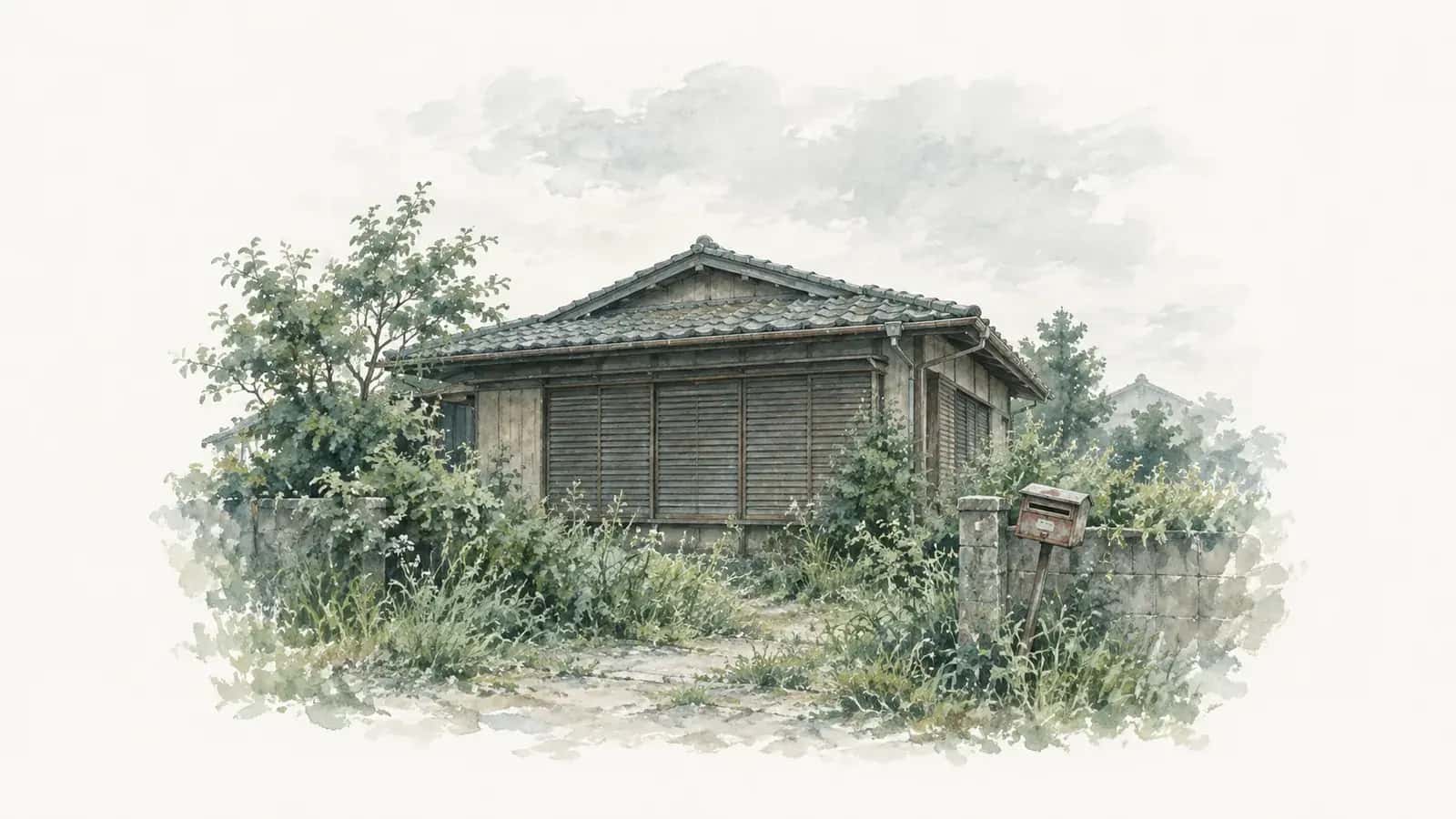

Multiple-stage inheritance is the state where, before inheritance registration was done, another heir also died and the number of heirs involved grew. Inheritance registration is a precondition for selling, but the sale preparation can run in parallel with registration. The keys are confirming all heirs' intentions, how to arrange a mandate to a representative, and the estate division. Registration lies with a judicial scrivener, disputes with a lawyer, and tax with a tax accountant.
In short: Multiple-stage inheritance (sūji sōzoku) is the state where, before inheritance registration was done, another heir also died and the number of heirs involved grew. Selling requires inheritance registration first, but the sale preparation can run in parallel with registration. The keys are confirming all heirs' intentions, how to arrange a mandate to a representative, and the estate division. Registration lies with a judicial scrivener, disputes with a lawyer, and tax with a tax accountant.
This article is for the representative (the eldest son, etc.) who wants to sell a family home that, after a parent's death, had its inheritance registration left undone until another heir also died and the heirs became numerous; it organises the steps to a sale from the Civil Code and the Real Property Registration Act. We handle valuation, the arrangement of the sale and brokerage. The inheritance registration in multiple-stage inheritance lies with a judicial scrivener; estate division in dispute (mediation and adjudication) among heirs with a lawyer; drafting support for the estate-division agreement with an administrative scrivener or the person themselves; and estimates of inheritance tax and capital-gains tax with a tax accountant. These are independent entities from Yotsuba Real Estate Co., Ltd. (四葉不動産株式会社), engaged separately for each service under a separation-of-engagement arrangement. For mandatory inheritance registration and selling in a single-stage inheritance, see inheritance registration becoming mandatory and selling; for the decision to sell or keep a family home, see should you sell or keep an inherited family home.
What is multiple-stage inheritance, and why do the heirs "increase"?
Multiple-stage inheritance (sūji sōzoku) is the state where, before one person's inheritance process (especially inheritance registration) was finished, one of their heirs died as well and inheritances stacked up. Because the status of the first inheritance's heir is passed to that person's heirs (spouse, children, etc.), the number of people involved grows like a snowball.
An heir succeeds, from the time inheritance begins, to all rights and obligations belonging to the decedent's property (Civil Code Art. 896). Where there are several heirs, the inherited property belongs to them in co-ownership (Art. 898), and each co-heir succeeds to rights and obligations in proportion to their inheritance share (Art. 899). If an heir dies before the estate is divided in the first inheritance, the "estate co-ownership share" that person held passes to the next heirs, stacking into second and third stages. For example, if, after the father's death and before the estate is divided, the mother or siblings die, their spouses and children join as parties too.
| State | Who becomes a party |
|---|---|
| First inheritance (father dies) | The father's heirs, such as the mother and children |
| Multiple-stage (the mother also dies before division) | The mother's heirs (other children, grandchildren, etc.), who succeeded to the father's heirs' status, also join |
| Stacking further | Intertwined with representation inheritance, it can spread to spouses, grandchildren, nephews and nieces |
Multiple-stage inheritance is a different concept from representation inheritance (where a child who predeceased the decedent is represented by a grandchild). Determining when each inheritance began and who the parties are is a tracing-the-family-register task; the final range of heirs is confirmed by a judicial scrivener or a lawyer.
Is inheritance registration always required before selling? (the order of sale and registration)
As a precondition for the transfer registration on a sale, inheritance registration from the deceased registered holder to the heirs is required. You cannot transfer "under the decedent's name" to the buyer. However, negotiation and preparation of the sale contract can proceed in parallel with inheritance registration.
Inheritance registration became mandatory on 1 April 2024, requiring an application within three years of learning that you acquired the property by inheritance (Real Property Registration Act Art. 76-2). Failure without justifiable grounds is subject to a civil fine of up to ¥100,000 (Art. 164(1)). Even when selling, inheritance registration cannot be avoided. A registration of rights is in principle applied for jointly by the registration holder and the registration obligor (Art. 60). In multiple-stage inheritance, whether the intermediate inheritance was a sole inheritance divides cases into those where the registration can be combined into one and those where it is applied for separately for each inheritance. This judgment and the registration application are the judicial scrivener's area.
| Step | Procedure | Who |
|---|---|---|
| 1 | Determine the heirs (collect family registers); divide the estate | Heirs / judicial scrivener / lawyer |
| 2 | Inheritance registration from the decedent to the heirs | Judicial scrivener |
| 3 | Sale contract and settlement (preparation may run in parallel with 1 and 2) | Us / heirs |
| 4 | Transfer of ownership from the heirs to the buyer | Judicial scrivener |
How do you obtain all heirs' consent? What if there are distant or overseas heirs?
To sell the inherited property "as a whole," in principle all heirs' agreement (the intention to divide and to sell) is required. If even one objects or does not participate, the sale cannot go ahead. Where there are distant or overseas heirs, exchanging documents and confirming identity take time, so build a contact network early.
Unless prohibited by will, co-heirs may at any time divide all or part of the estate by agreement, and where the agreement is not reached, each co-heir may request division by the family court (Civil Code Art. 907). The effect of estate division is retroactive to the time inheritance began, but it cannot prejudice the rights of third parties (Art. 909). It is usual to put everyone's intention into a document (an estate-division agreement) with registered seals and seal certificates attached. Heirs living overseas obtain, in place of a seal certificate, a signature certificate (shomei証明) and a certificate of residence at the local Japanese embassy or consulate. If the heirs cannot agree and a dispute arises, including mediation and adjudication, that is a lawyer's area. Selling where overseas heirs are involved is also organised in selling Japanese property with heirs living overseas.
Who becomes a party to the sale contract? (mandate to a representative, sale of a share)
In principle, the sellers under the sale contract are all the heirs. In practice, a common form is for everyone to give a power of attorney to a representative (the eldest son, etc.), who acts as the single point of contact for the contract and settlement. Where everyone's steps do not align, there is also the option of selling only your own share, but note that its use is limited and the price tends to fall.
In the state of estate co-ownership, each heir holds a share. To sell the whole, all in principle contract as sellers; when mandating a representative, clarify the scope of the mandate (conclusion of the contract, receipt of the price, handover, etc.) in the power of attorney. Your own share alone can be transferred to a third party without the other heirs' consent, but because you cannot use the whole of the co-owned property, buyers are limited. The final arrangement of who joins the contract as a party, and whether a mandate suffices, is confirmed with a judicial scrivener in relation to registration, and with a lawyer where a dispute is involved.
| How to sell | Parties | Points to note |
|---|---|---|
| All sell (representative mandated) | All heirs (representative as contact) | Clarify the mandate scope in the power of attorney; all registered seals and seal certificates |
| Sell only a share | Only the heir holding the share | Buyers are limited and the price tends to fall |
| Acquire solely by division, then sell | The heir who acquired it | Takes time until the division is agreed |
Have a question about your situation?
Tell us about your property search or plans to sell.
How much do the costs and time come to?
Multiple-stage inheritance tends to swell both costs and time, because the heir investigation and the number of registrations increase. Because amounts and taxes vary greatly by case, here we limit ourselves to organising the cost items and leave the figures to each provider.
The registration licence tax on inheritance registration is calculated by multiplying the fixed-asset-tax valuation by the rate, and the rate for transfer of ownership by inheritance is in principle 4/1,000 (0.4%) (Registration Licence Tax Act; the specific tax base and any reduction are confirmed by a judicial scrivener or tax accountant). In multiple-stage inheritance, if registration is split into several times, the registration licence tax and the judicial scrivener's fee stack up accordingly. Collecting family registers takes time when the registered domiciles are scattered, and with many heirs or overseas residents it can run to months. Capital-gains tax on a sale gain, and the applicability of the acquisition-cost add-on or the vacant-house exemption, are estimated by a tax accountant.
| Cost item | Content | Who |
|---|---|---|
| Registration licence tax | Inheritance registration is in principle 0.4% of the valuation (plus a separate transfer-registration portion) | Judicial scrivener calculates |
| Judicial scrivener's fee | Inheritance registration (more items in multiple-stage cases) | Judicial scrivener |
| Family registers / certificates | Register collection, signature certificates for overseas heirs, etc. | Heirs / judicial scrivener |
| Brokerage fee | Brokerage commission to the real estate company | Us |
| Tax | Capital-gains tax; applicability of the acquisition-cost add-on and vacant-house exemption | Tax accountant estimates |
We arrange the valuation and sale schedule while watching the heirs' alignment, and handle the sale contract, settlement and brokerage. See inherited-property consultations. For a family home with special rights such as a leasehold, see also explaining leasehold-land property to Chinese-speaking clients. The inheritance registration in multiple-stage inheritance lies with a judicial scrivener, estate-division disputes with a lawyer, and tax with a tax accountant — each an independent entity, engaged separately. We proceed by direct contract, direct invoice and direct payment; no referral or lead-transfer fees are exchanged.
Frequently asked questions
Q. Can I sell the family home without doing inheritance registration?
A. No. As a precondition for the transfer registration to the buyer, inheritance registration from the deceased registered holder to the heirs is required. Inheritance registration became mandatory on 1 April 2024, requiring an application within three years of learning of the acquisition (Real Property Registration Act Art. 76-2). The sale-contract preparation can, however, run in parallel with registration.
Q. What if one heir is overseas and hard to reach?
A. Selling the whole in principle requires everyone's agreement. An overseas heir obtains, in place of a seal certificate, a signature certificate at the local Japanese embassy or consulate. Because the exchange takes time, build a contact network early and clarify the mandate scope in writing. If agreement cannot be reached, it is separated to a lawyer.
Q. Can it not be sold unless all heirs are present? Can I sell only my own share?
A. Selling the whole requires everyone's agreement, but your own share alone can be transferred to a third party without the others' consent. Note, however, that buyers are limited and the price tends to fall because you cannot use the whole co-owned property. We organise which approach is best, and refer to a lawyer where a dispute is involved.
Q. Does multiple-stage inheritance make the registration costs higher?
A. If the intermediate inheritance is not a sole inheritance and registration is split into several times, the registration licence tax (in principle 0.4% of the valuation for inheritance registration) and the judicial scrivener's fee stack up accordingly. Whether it can be combined into one and the calculation are the judicial scrivener's area. Amounts vary by case, so confirm estimates with a judicial scrivener or tax accountant.
Primary sources
- Real Property Registration Act, Art. 60 (joint application), Art. 76-2 (duty to apply for inheritance registration), Art. 164(1) (civil fine) / 不動産登記法 (Art. 76-2 = apply within three years of learning of acquisition by inheritance; Art. 164(1) = a civil fine of up to ¥100,000 for failure without justifiable grounds. The application duty came into force on 1 April 2024. Accessed 12 October 2026)
- Civil Code, Arts. 896, 898, 899, 907, 909 / 民法 (Art. 896 = general effect of inheritance; Art. 898 = estate co-ownership; Art. 899 = succession in proportion to share; Art. 907 = estate-division agreement and adjudication; Art. 909 = retroactive effect of division and protection of third parties. Accessed 12 October 2026)
- Ministry of Justice, "Special page on the mandatory nature of inheritance registration" / 法務省 (guidance on mandatory inheritance registration (in force 1 April 2024) and the heir-declaration registration. Accessed 12 October 2026)
Updated and additional sources checked on 12 October 2026. The provisions of the Real Property Registration Act and the Civil Code were checked in the consolidated statute text on e-Gov. The rate, tax base and reductions of the registration licence tax, whether a combined-intermediate registration is possible in multiple-stage inheritance, and the time for family-register collection and overseas-heir procedures vary by case and so are not asserted here but left as unverified; registration is confirmed by a judicial scrivener, tax by a tax accountant, and disputes by a lawyer against original materials. The Ministry of Justice special page's URL and content are as of the access date and may change in structure. Publication remains held pending qualified review.
This article provides general information and does not present individual legal conclusions, the outcome of estate division, or tax conclusions. Confirmation by the competent authorities and qualified professionals is required. Yotsuba Real Estate Co., Ltd. (四葉不動産株式会社), 四葉行政書士事務所, 四葉社会保険労務士事務所 and other specialists (judicial scrivener, tax accountant, lawyer) are independent entities, engaged separately for each service. We proceed by direct contract, direct invoice and direct payment; no referral or lead-transfer fees are exchanged. The inheritance registration in multiple-stage inheritance lies with a judicial scrivener, disputes among heirs and mediation/adjudication of estate division with a lawyer, and inheritance tax and capital-gains tax with a tax accountant. The initial property consultation is free; confirm each professional's scope and fees with that provider.
Author
Joji Uramatsu (浦松 丈二), real estate transaction specialist (Tokyo Governor registration No. 293544) and administrative scrivener (registration No. 25087022); representative director of Yotsuba Real Estate Co., Ltd. (四葉不動産株式会社; Real Estate Brokerage, Tokyo Governor (1) No. 113304) and representative of 四葉行政書士事務所. In Kohinata, Bunkyo-ku, Tokyo, about five minutes' walk from Myogadani Station. For a family home where the heirs have increased, he handles valuation, brokerage and the building of the sale schedule; registration is assigned to a judicial scrivener, disputes to a lawyer, and tax to a tax accountant. Author profile.
Related Articles
- 2026.10.16Inheritance
There is a seizure registration on inherited real estate. Can it be sold, and how do you remove it?
- 2026.10.15Inheritance
Who owns the 'rent before estate division' of inherited rental property? Attribution and settlement
- 2026.10.14Inheritance
Can the inherited-vacant-house ¥30 million special deduction be used even for a family home where the decedent had moved into an elderly-care facility?
Feel free to reach out for a consultation
Questions about our column articles are also welcome.
Sell, rent out, or keep — start with a conversation before you decide.
An inherited family home, a property you own while living abroad, a tenanted building — send us a line on LINE about your situation. Our representative (a Licensed Real Estate Transaction Specialist) replies personally and lays out the outlook for selling, renting out, or keeping it. Appraisal and brokerage are handled solely by Yotsuba Real Estate Co., Ltd.
LINE connects you directly to our representative, Joji Uramatsu. Messages are accepted 24/7 and answered in order.
5 min walk from Myogadani Sta. (Tokyo Metro Marunouchi Line)|10:00–18:00 (Closed Tue & Wed)