



The family home I inherited turns out to be a 'stigmatised property' — what is the duty to disclose and the order of steps when selling?
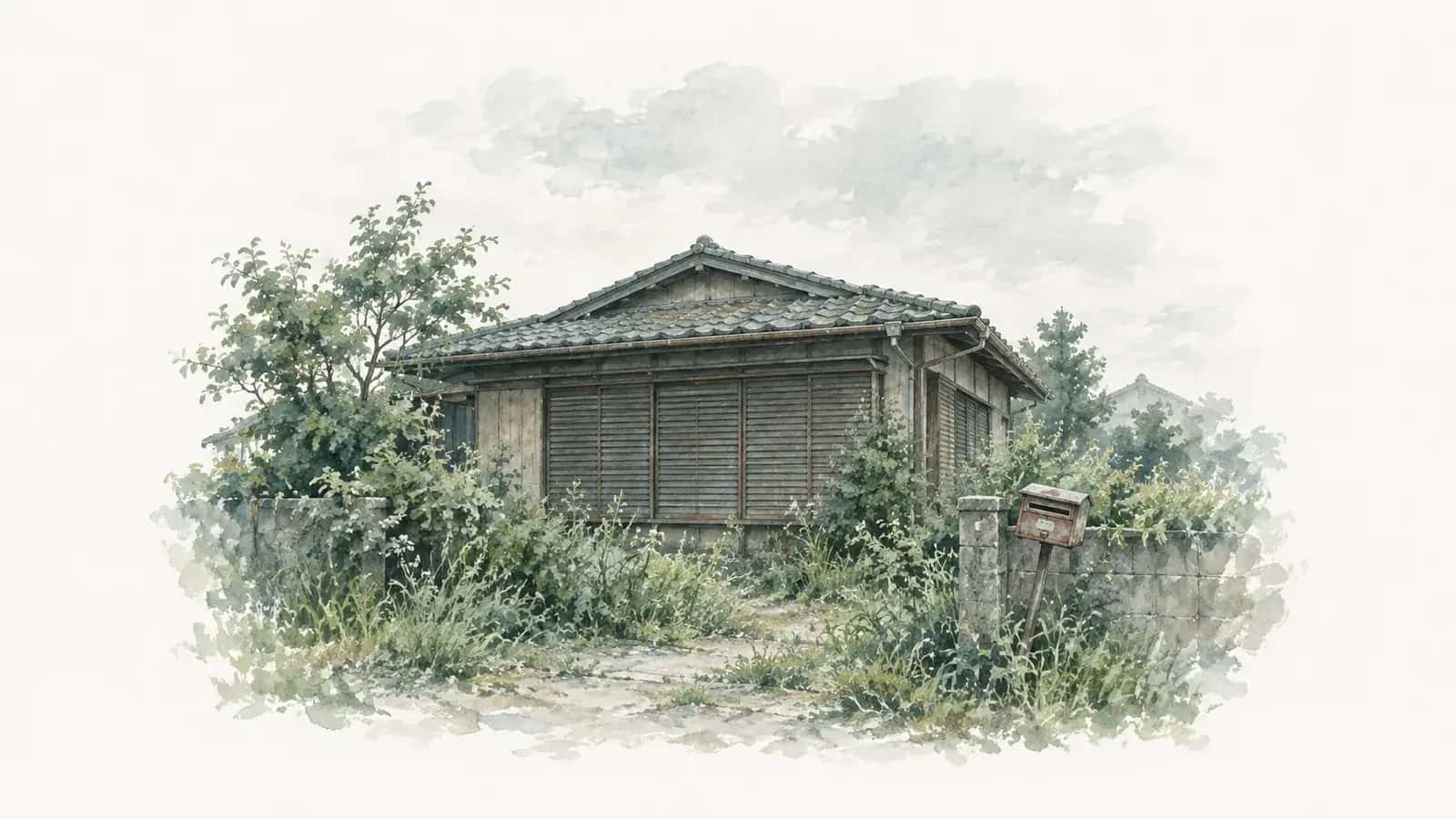

Even if someone died in the family home you inherited, you do not always have to disclose it when selling. The Ministry of Land, Infrastructure, Transport and Tourism's 'Guidelines on disclosure of human death by real estate transaction operators' (October 2021) treat natural death (old age, illness) and everyday accidental death (a fall, choking) as, in principle, not requiring disclosure, while suicide, homicide and the like, or cases where special cleaning was carried out, are subject to disclosure. For leases, roughly three years from the event is the guide for no longer having to disclose, but a sale has no such year cut-off. If the buyer asks, or the social impact is large, you disclose regardless of time or cause of death. Neglecting disclosure can become a non-conformity / damages issue (Civil Code Arts. 562–564, 566).
In short: even if someone died in the family home you inherited, you do not always have to disclose it when selling. The Ministry of Land, Infrastructure, Transport and Tourism's "Guidelines on the disclosure of human death by real estate transaction operators" (October 2021) treat natural death (old age, illness) and everyday accidental death (a fall, choking) as, in principle, not requiring disclosure, while suicide, homicide and the like, or cases where special cleaning was carried out, are subject to disclosure. For leases, roughly three years from the event is the guide for no longer having to disclose, but a sale has no such year cut-off. If the buyer asks, or the social impact is large, you disclose regardless of time or cause of death. Neglecting disclosure can become a contract-non-conformity or damages issue (Civil Code Articles 562–564 and 566).
A parent or relative died inside the family home you inherited — you want to sell, but how far does the duty to disclose go, and how much will the price fall? Much of the anxiety comes from "the standard being unclear." In October 2021 the Ministry of Land, Infrastructure, Transport and Tourism published the "Guidelines on the disclosure of human death by real estate transaction operators," setting out the disclosure thinking that a real estate transaction operator bears under the Real Estate Brokerage Act. This is for an heir who has inherited a family home where a death inside (natural death, suicide, an incident, etc.) occurred and is considering selling, organising the need to disclose, the guide on periods, the treatment in the important-matters explanation, and ways to sell, from the Guidelines and the Civil Code and the Real Estate Brokerage Act. The final judgment on whether to disclose in an individual case is, depending on the circumstances, left to qualified professionals and the courts. This article is general information.
If someone died in the family home I inherited, must I always disclose it when selling?
Not always. Natural death (old age, illness, etc.) and everyday accidental death (a fall, choking, etc.) are, in principle, not required to be disclosed. On the other hand, suicide, homicide and the like, or cases where special cleaning was carried out, are subject to disclosure.
The Ministry's Guidelines organise the judgment of whether a real estate transaction operator should, on behalf of the seller or lessor, disclose to the buyer or lessee a "human death" that occurred in the subject property or the common parts of its building. The starting point is "what kind of death occurred."
| Form of death | How a sale treats disclosure (in principle) |
|---|---|
| Natural death (old age, illness, etc.) | In principle not required to be disclosed |
| Everyday accidental death (a fall, choking, an accident while bathing, etc.) | In principle not required to be disclosed |
| Suicide, homicide and the like (death other than the above) | Subject to disclosure |
| Where special cleaning was carried out | Subject to disclosure |
But this is a "principle." If the buyer asks about the existence of a case, or if you recognise special circumstances that the buyer should grasp given the scale of the social impact, you disclose regardless of time or cause of death. The Guidelines are a practical guide for operators; the final judgment on whether there is a duty to disclose in an individual case is, depending on the circumstances, left to qualified professionals and the courts. How to sell inherited vacant homes in general is set out in inheritance and real estate.
How do the need to disclose and the guide on periods differ for natural death, suicide and an incident?
The form of death splits the principle of whether to disclose, and further, the treatment of the "period guide" differs between a lease and a sale. For a lease, roughly three years from the event is the guide for no longer having to disclose, but a sale has no such year cut-off.
The Guidelines state that, for a lease, even for a death other than a natural or everyday accidental death (suicide, homicide, etc.) or where special cleaning was carried out, once roughly three years have passed from the occurrence of the event, in principle it need not be disclosed (excluding cases of especially high newsworthiness, notoriety or social impact). By contrast, a sale has no such "roughly three years" cut-off. Because selling a family home is a sale, you cannot conclude that disclosure is unnecessary on the ground of elapsed years alone.
| Point | Lease | Sale (selling a family home is this) |
|---|---|---|
| Natural / everyday accidental death | In principle not disclosed | In principle not disclosed |
| Suicide, homicide, etc. / special cleaning | Roughly three years from the event is the guide for no longer disclosing | No year cut-off |
| If the buyer/lessee asks | Disclose regardless of time or cause of death | Disclose regardless of time or cause of death |
| Case of especially large social impact | May be disclosed even after three years | Disclose |
Note that even where you disclose, the Guidelines say you need not disclose the deceased's name, age, address, family composition, or the specific form or circumstances of discovery of the death, requiring consideration for privacy. How much, and how, to write connects to the next point — the important-matters explanation and the disclosure statement.
How should I write the important-matters explanation and the disclosure statement?
In a sale, you explain to the buyer in the important-matters explanation under Article 35 of the Real Estate Brokerage Act, and the seller records the facts they know in a disclosure statement (property-condition report). If the seller knows a fact that may amount to a psychological defect and hides it, it becomes a seed of later dispute.
Article 35 of the Real Estate Brokerage Act (Act No. 176 of 1952) obliges a real estate transaction operator to explain important matters to the buyer before the contract is formed. Of the facts concerning "human death," those that are subject to disclosure are conveyed to the buyer in the important-matters explanation. As a premise, the seller accurately records the facts they know in the disclosure statement (property-condition report) generally used in a sale. In the case of an inherited family home, the heir may not directly know the circumstances of the death, but not hiding the facts you know is the starting point.
| Document | Role | Point for the heir (seller) |
|---|---|---|
| Disclosure statement (property-condition report) | Conveys to the buyer the property's condition/history that the seller knows | Accurately write facts you know, such as a death inside; mark points you do not know as "unknown" |
| Important-matters explanation (Art. 35) | The operator explains to the buyer before the contract | Reflect facts subject to disclosure in the explanation after investigation |
You need not write the name, the specific form of death or the circumstances of discovery, but hiding the very existence of the fact can lead to a breach of the duty to disclose or a non-conformity issue. If you are unsure how much to write, align with the operator handling the transaction in advance.
What happens if I neglect disclosure (non-conformity / damages)?
If you sell while hiding a fact that should be disclosed, it can become a contract-non-conformity issue (Civil Code Articles 562–564) or a damages issue. Whether a psychological defect amounts to non-conformity turns on the individual circumstances, but if it becomes a dispute it is the attorney's domain.
The Civil Code (Act No. 89 of 1896) allows the buyer, where the delivered subject matter does not conform to the content of the contract, to demand cure (Art. 562), a reduction of the price (Art. 563), and damages or rescission of the contract (Art. 564). Whether a so-called psychological defect (a circumstance bearing on comfort of living, such as a human death) amounts to this "non-conformity" is judged on individual circumstances — the form of the case, elapsed time, the buyer's awareness, etc. — and is ultimately left to the courts.
On periods, Article 566 provides that if the buyer does not notify the seller to that effect within one year of becoming aware of the non-conformity, they can no longer demand cure, price reduction, damages or rescission on the ground of the non-conformity (except where the seller knew of the non-conformity at delivery, or did not know it through gross negligence). Selling without disclosing what should be disclosed can bring this warranty or damages, and for the operator there is also the issue of the duty to disclose under the Real Estate Brokerage Act. Because the final judgment on whether and what to disclose is, depending on the circumstances, left to qualified professionals and the courts, consult early on cases where you are unsure.
Have a question about your situation?
Tell us about your property search or plans to sell.
How should I think about price and ways to sell (as-is, demolition, buy-out)?
A property with a psychological defect generally tends to fall below the market price, while there are ways to sell — sell as-is, demolish and sell as vacant land, or sell by a buy-out. Which is more advantageous net is considered together with the location, the state of the building and tax special measures.
The impact on price has a range depending on the form of the case, the elapsed time and the location, so this article cannot state a uniform rate of decline (because it differs case by case). The main ways to sell are as follows.
| Way to sell | Thinking |
|---|---|
| Sell as-is | Sell without spending on demolition. The buyer pool and price depend on the form of the case and the location |
| Demolish and sell as vacant land | Demolish the building and sell. Judge taking into account demolition cost, the fixed-asset tax that rises on becoming vacant land, and the order of applying the vacant-house special measure |
| Buy-out by a real estate company | Sell without an ordinary buyer in between. The price tends to be relatively lower, but it is easier to let go quickly and surely |
A comparison of demolishing and selling as vacant land versus selling with the old house (as-is) is in Sell an inherited vacant home demolished as vacant land, or as land with the old house?; how to sell an old-earthquake-standard condo is in Can you sell an inherited old-earthquake-standard condo?. Tax judgments such as capital gains and the 30-million-yen special deduction for vacant homes are the licensed tax accountant's domain. We can guide the appraisal and comparison of which way to sell fits, as information provision.
Who should you consult?
The sale process, appraisal, buyer search, brokerage and sale contract for a stigmatised property, and assistance in preparing the disclosure statement, are undertaken by Yotsuba Real Estate Co., Ltd. (licensed real estate agent, Tokyo Governor (1) No. 113304). Preparation of documents submitted to public offices or between private parties, such as the estate-division agreement, is undertaken by Yotsuba Administrative Scrivener Office.
These are each independent business entities. You engage each directly. We neither accept nor pay referral fees or introduction commissions. Inheritance registration and ownership-transfer registration are for a judicial scrivener; tax judgments such as capital gains and the vacant-house special measure for a licensed tax accountant; and disputes and damages with neighbours or the buyer for an attorney — each engaged by you directly. The final judgment on whether and what to disclose is, depending on the circumstances, left to qualified professionals and the courts. Consultation is free of charge.
Frequently asked questions
Q. A parent died of illness in the family home I inherited. Must I disclose it when selling?
A. Natural death such as old age or illness is, under the Ministry's Guidelines, in principle not required to be disclosed. The same goes for an everyday accidental death such as a fall, choking or an accident while bathing. However, where special cleaning was carried out, where the buyer asks about the existence of a case, or where there are special circumstances the buyer should grasp given the scale of the social impact, you disclose. Because the final judgment in an individual case is, depending on the circumstances, left to qualified professionals and the courts, please consult if unsure.
Q. If there was a suicide or an incident, does it become unnecessary to disclose after some years?
A. For a lease, the Guidelines treat roughly three years from the event as the guide for no longer having to disclose, even for a death other than natural or everyday accidental death, or where special cleaning was carried out (excluding cases of especially high newsworthiness, notoriety or social impact). By contrast, a sale has no such "roughly three years" cut-off. Because selling a family home is a sale, note that you cannot conclude that disclosure is unnecessary on the ground of elapsed years alone.
Q. When disclosing, must I explain the deceased's name or the manner of death?
A. No. The Guidelines say that even where you disclose, you need not disclose the deceased's name, age, address, family composition, or the specific form or circumstances of discovery of the death, requiring consideration for privacy. What is subject to disclosure is the existence of a fact that affects the transaction decision, not conveying the deceased's personal information in detail. Align with the operator handling the transaction on how much, and how, to record.
Q. What happens if I sell without disclosing?
A. Selling while hiding a fact that should be disclosed can become a contract-non-conformity issue (Civil Code Articles 562–564) or a damages issue. Article 566 of the Civil Code provides that if the buyer does not notify within one year of becoming aware of the non-conformity they can no longer make a claim on that ground, while excepting the case where the seller knew of the non-conformity at delivery or did not know it through gross negligence. Whether a psychological defect amounts to non-conformity turns on individual circumstances, and the final judgment is left to the courts. Disputes are the attorney's domain. Conveying accurately rather than hiding is the starting point for avoiding later disputes.
Sources (primary)
- Ministry of Land, Infrastructure, Transport and Tourism, "Guidelines on the disclosure of human death by real estate transaction operators" (published October 2021; organises the disclosure thinking a real estate transaction operator bears under the Real Estate Brokerage Act regarding human death occurring in the subject property or its common parts; natural death and everyday accidental death are in principle not required to be disclosed; for a lease, even other deaths or where special cleaning was carried out, roughly three years from the event is the guide for no longer disclosing; a sale has no such period cut-off; where the buyer/lessee asks or the social impact is especially large, disclose regardless of time or cause of death; even where disclosing, the name, form of death, circumstances of discovery, etc. need not be disclosed). Accessed 1 October 2026.
- e-Gov "宅地建物取引業法" (Real Estate Brokerage Act) — Act No. 176 of 1952. Art. 35 (explanation of important matters — the operator's duty to explain important matters to the buyer, etc. before the contract is formed). Accessed 1 October 2026.
- e-Gov "民法" (Civil Code) — Act No. 89 of 1896. Art. 562 (buyer's right to demand cure); Art. 563 (right to demand a price reduction); Art. 564 (damages / rescission — without prejudice to the exercise of rights under Arts. 415, 541 and 542); Art. 566 (period limit on warranty for non-conformity of kind or quality — the buyer cannot claim unless they notify within one year of becoming aware of the non-conformity; except where the seller was in bad faith or grossly negligent at delivery). Accessed 1 October 2026.
Whether and what to disclose, whether a psychological defect amounts to non-conformity, and the impact on price vary with individual circumstances — the form of death, elapsed time, notoriety, location, etc. — and are ultimately left to qualified professionals and the courts; this article makes no determination on an individual case. Consult a judicial scrivener on inheritance registration and ownership-transfer registration, and a licensed tax accountant on specific tax judgments such as capital gains and the 30-million-yen special deduction for vacant homes; consult an attorney on disputes and damages with neighbours or the buyer. This article is general information and does not judge or guarantee the need for a particular disclosure or the suitability of a sale or a tax amount. Property investigation, brokerage and the sale contract are undertaken by Yotsuba Real Estate Co., Ltd. (licensed real estate agent), and the preparation of documents such as the estate-division agreement by Yotsuba Administrative Scrivener Office, each as an independent business entity engaged separately. There are no referral or introduction fees.
About the author
Joji Uramatsu — licensed real estate transaction specialist (Tokyo Governor registration No. 293544) and administrative scrivener (registration No. 25087022). Representative Director, Yotsuba Real Estate Co., Ltd. (licensed real estate agent, Tokyo Governor (1) No. 113304); principal, Yotsuba Administrative Scrivener Office. Kohinata, Bunkyo, Tokyo, about five minutes' walk from Myogadani station. Placing the property (real estate) and the rights/procedures (the allocation of inheritance, registration and tax) on the same table to check them together. Full profile: author page.
Previous article
What property can become a private inspection station (designated auto maintenance business)? The difference from a certified workshop, and the equipment and site requirements
Next article
What kind of property can become a designated driving school? Course, skills/classroom rooms, rest-room area and the zoning district
Related Articles
- 2026.10.03Inheritance
Selling an inherited tower apartment? The Reiwa-6 new valuation of residential condominium property and the selling steps
- 2026.09.30Inheritance
How do you sell an inherited sectioned-ownership office (a single tenanted unit)? Succession of the lease and the practicalities of the management association
- 2026.09.27Inheritance
Raising inheritance-tax cash by selling inherited property — a schedule counted back from the 10-month deadline
Feel free to reach out for a consultation
Questions about our column articles are also welcome.
Sell, rent out, or keep — start with a conversation before you decide.
An inherited family home, a property you own while living abroad, a tenanted building — send us a line on LINE about your situation. Our representative (a Licensed Real Estate Transaction Specialist) replies personally and lays out the outlook for selling, renting out, or keeping it. Appraisal and brokerage are handled solely by Yotsuba Real Estate Co., Ltd.
LINE connects you directly to our representative, Joji Uramatsu. Messages are accepted 24/7 and answered in order.
5 min walk from Myogadani Sta. (Tokyo Metro Marunouchi Line)|10:00–18:00 (Closed Tue & Wed)